For many professionals across Indian cities, the problem isn't simply sweating. Sweating is a normal response that helps your body regulate its temperature. The bigger frustration is arriving at work feeling uncomfortable, noticing sweat marks on your shirt, or becoming conscious of your appearance before the first meeting has even started.
And the clothes that work perfectly inside an air-conditioned office aren't necessarily the clothes that perform best during the journey to get there.
So if you regularly ask “Why do I sweat so much during my commute?” or “How can I avoid sweat marks on my shirt while travelling to work?”, the answer isn't necessarily about finding one perfect fabric.
It's about looking at the entire journey - heat, humidity, activity, clothing, layering, and moisture.
Quick Answer
If you sweat heavily during your commute, focus on breathable clothing, a comfortable fit, suitable colors, and how your layers handle moisture.
Cotton can feel soft and breathable, linen allows good airflow, and some performance fabrics are designed to move moisture and dry faster. But fabric isn't the only factor. A crowded commute, direct sunlight, a heavy backpack, humidity, and rushing can all increase discomfort and make sweat more noticeable.
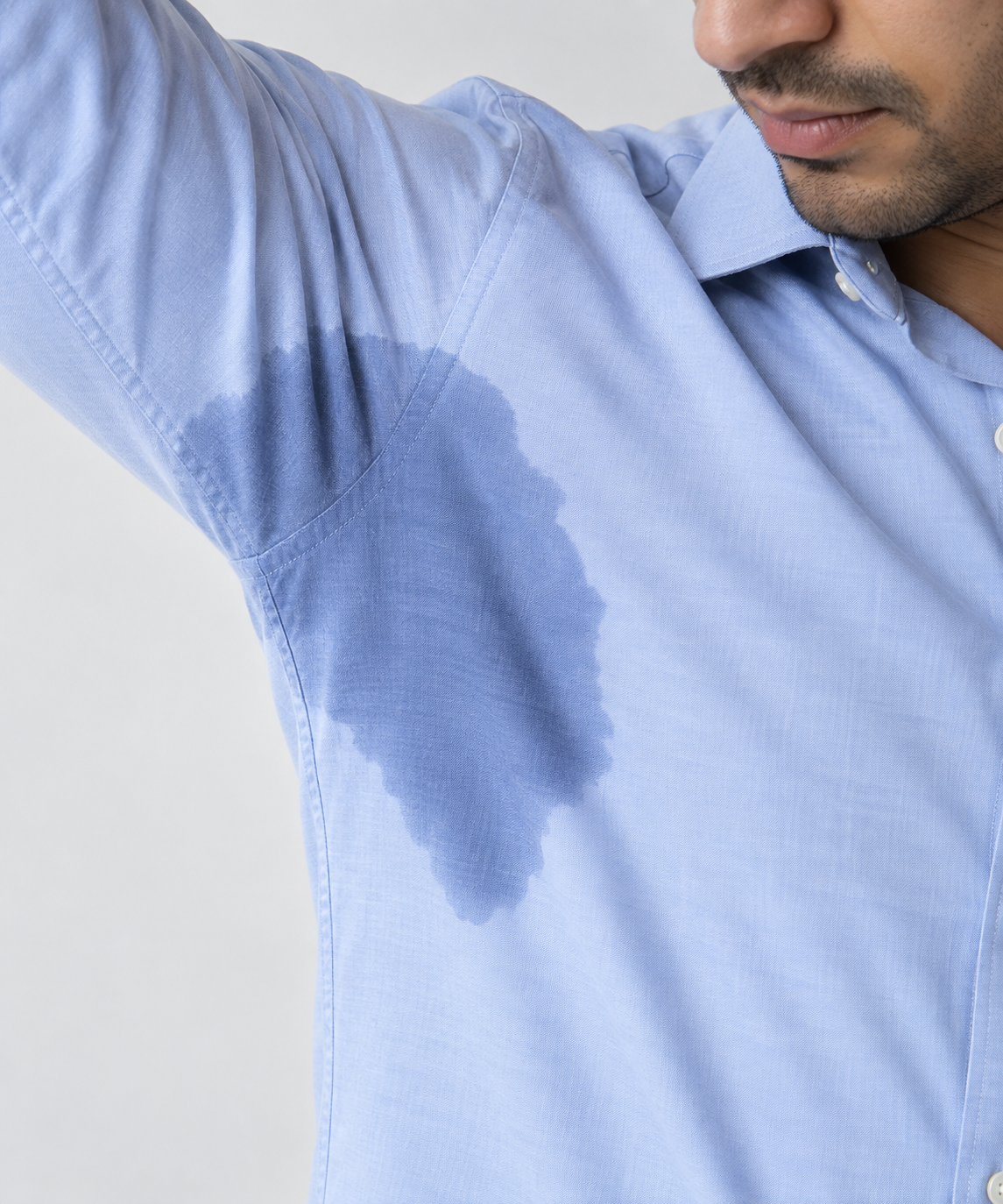
If visible underarm sweat marks are your main concern, pay particular attention to the layer underneath your shirt. A regular undershirt can absorb moisture, but a sweat-management base layer is designed specifically to help reduce moisture transfer to the outer garment.
The goal isn't to eliminate normal sweating. It's to arrive at work feeling as comfortable and prepared as possible.
Why Your Commute Feels More Uncomfortable Than the Weather Suggests
It's easy to look at the temperature and assume that's the main reason you're sweating.
But your commute is rarely just about temperature.
A typical journey can combine several factors at once:
- Walking or cycling
- Climbing stairs
- Standing in crowded spaces
- Waiting outdoors
- Humidity
- Direct sunlight
- Carrying a backpack or laptop bag
- Rushing because you're late
- Stress before an important workday
Each factor can contribute to heat buildup or make sweating feel more noticeable.
A commute that looks manageable on a weather app can therefore feel very different once you're walking through a humid street with a backpack on your back.
And there's another important distinction:
Your body may be sweating normally, while your clothing may be making the experience feel worse.
That's why looking at clothing performance is useful.
Most Professionals Dress for the Office, Not the Commute
When choosing an outfit for work, most people think about where they're going.
Will this shirt look professional?
Will it work in the office?
Will it look good for a meeting?
But there's often less thought given to how that same outfit will perform during the journey to work.
A shirt that feels perfectly comfortable in an air-conditioned office may behave very differently after 45 minutes of walking, waiting, standing, and travelling through humid weather.
This is why some professionals end up:
- Avoiding certain shirt colors
- Carrying a spare shirt
- Changing clothes after reaching work
- Checking their underarms before meetings
- Worrying about visible sweat marks
Your clothing is effectively dealing with two different environments during the same workday:
The commute → heat, movement, humidity and exposure
The workplace → controlled temperature, less physical activity and a more formal setting
Choosing clothing with both environments in mind can make the transition much easier
1. Choose the Right Fabric for Your Commute
Fabric affects how your clothing handles heat, airflow, and moisture.
There isn't one fabric that is automatically perfect for every commuter. Your choice depends on your climate, commute length, activity level, and personal comfort.
Cotton
Cotton remains one of the most common choices for everyday clothing.
It's:
- Soft against the skin
- Comfortable for long periods
- Naturally breathable
- Easy to wear in professional settings
Cotton is also absorbent. It can take up moisture from the skin, which can feel comfortable initially.
The limitation is that absorbing sweat doesn't mean drying quickly.
Once a cotton garment accumulates enough moisture, it can remain damp for longer, particularly in humid conditions. That can make the shirt feel heavier and can also make sweat marks more visible.
Linen
Linen is another popular option for hot weather because of its lightweight construction and airflow.
It can work particularly well when your priority is feeling cool and allowing heat to escape.
The trade-off is practical rather than purely functional: linen wrinkles easily, which may not be ideal for every office environment.
It can be an excellent choice for casual workwear or less formal settings, but your commute and workplace dress code still matter.
Performance Fabrics
Many performance fabrics are designed to move moisture away from the skin and dry relatively quickly.
This can be useful when your commute involves significant walking, cycling, or other physical activity.
However, “performance fabric” covers many different constructions. Not every synthetic fabric feels the same, and moisture movement isn't the only consideration for an office outfit.
You still need to consider:
How does it feel against your skin?
How breathable is it?
How quickly does it dry?
How does it look after several hours of wear?
There is no single perfect fabric for every commuter.
See,Best Fabrics for People Who Sweat a Lot: What Actually Keeps You Dry?
2. Do Clothing Colors Really Matter?
Yes - but there are two separate reasons to think about color.
Heat Absorption
Darker colors generally absorb more solar radiation than lighter colors when exposed to direct sunlight.
So if you're walking outdoors for a significant part of your commute, lighter-colored clothing can be useful for reducing heat absorption.
But that doesn't automatically make lighter colors better for sweat visibility.
Sweat Visibility
Heat and sweat visibility are two different problems.
When fabric becomes wet, the affected area can look darker than the surrounding dry fabric. Certain mid-tone shades can therefore make sweat marks particularly noticeable.
Grey, light blue, olive, and some pastel shades can be examples of colors where moisture creates a visible contrast.
This creates an interesting situation:
The shirt that feels comfortable in the heat isn't necessarily the shirt that hides sweat best.
If visible sweat is something you regularly worry about during your commute, consider both how the color handles sunlight and how it looks when the fabric becomes damp.
3. What Happens to Sweat After It Leaves Your Skin?
Sweating is only the beginning.
Once sweat reaches the surface of your skin, the moisture interacts with whatever you're wearing.
Think about your clothing as a simple system:
Skin → Base Layer → Outer Shirt
The way moisture moves through these layers can influence whether your outer shirt stays visually clean or develops visible sweat marks.
This is especially relevant around the underarms, where sweat can accumulate and become noticeable relatively quickly.
And this is where simply choosing a “breathable shirt” doesn't always solve the whole problem.
A shirt can be breathable and comfortable while still showing moisture.
The question isn't only:
“Can air move through this fabric?”
It's also:
“What happens to sweat once it reaches the clothing?”
Why a Regular Undershirt Doesn't Always Solve Sweat Marks
A traditional cotton undershirt can provide a useful layer between your skin and outer shirt.
It can absorb some moisture and may make an outer shirt feel more comfortable.
But absorption has a limit.
As moisture builds up, it can eventually move through the layers and become visible on the outer garment.
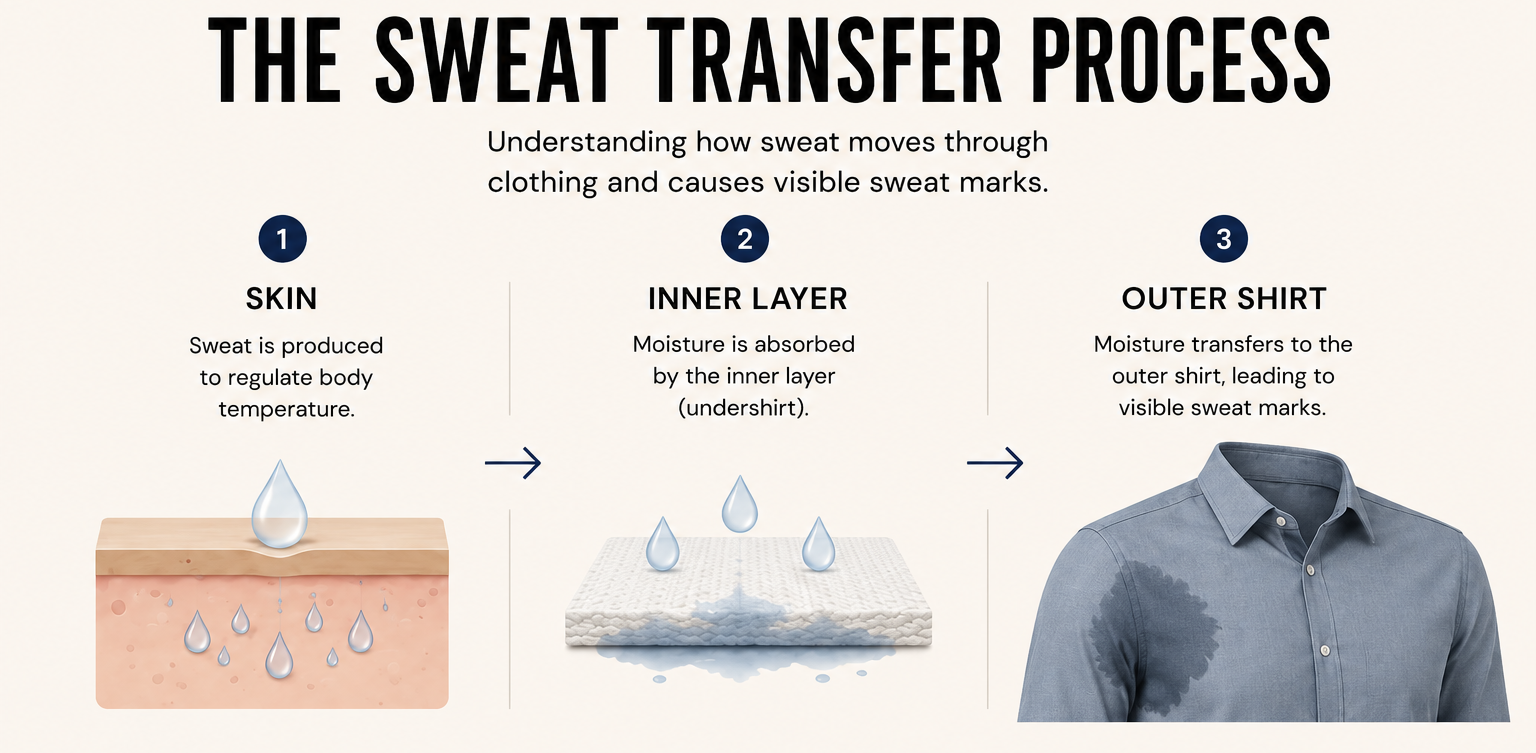
That's why wearing an undershirt doesn't automatically mean your outer shirt will remain free of sweat marks.
The construction and purpose of the base layer matter.
See,Sweatproof Undershirt vs Regular Undershirt: Which One Should You Choose?
How YUGHO Approaches Sweat Management
This is the specific problem YUGHO focuses on: visible underarm sweat marks during everyday situations.
YUGHO's Sweatproof Undershirt uses a targeted underarm protection zone designed to help reduce moisture transfer from the inner layer to the outer shirt.
That makes it particularly relevant for situations where you may not be able to control the conditions around you such as a humid morning commute, a crowded train, walking to work, or heading straight into a meeting after travelling.
The purpose is simple manage the moisture at the underarm area before it becomes as visible on your outer clothing.
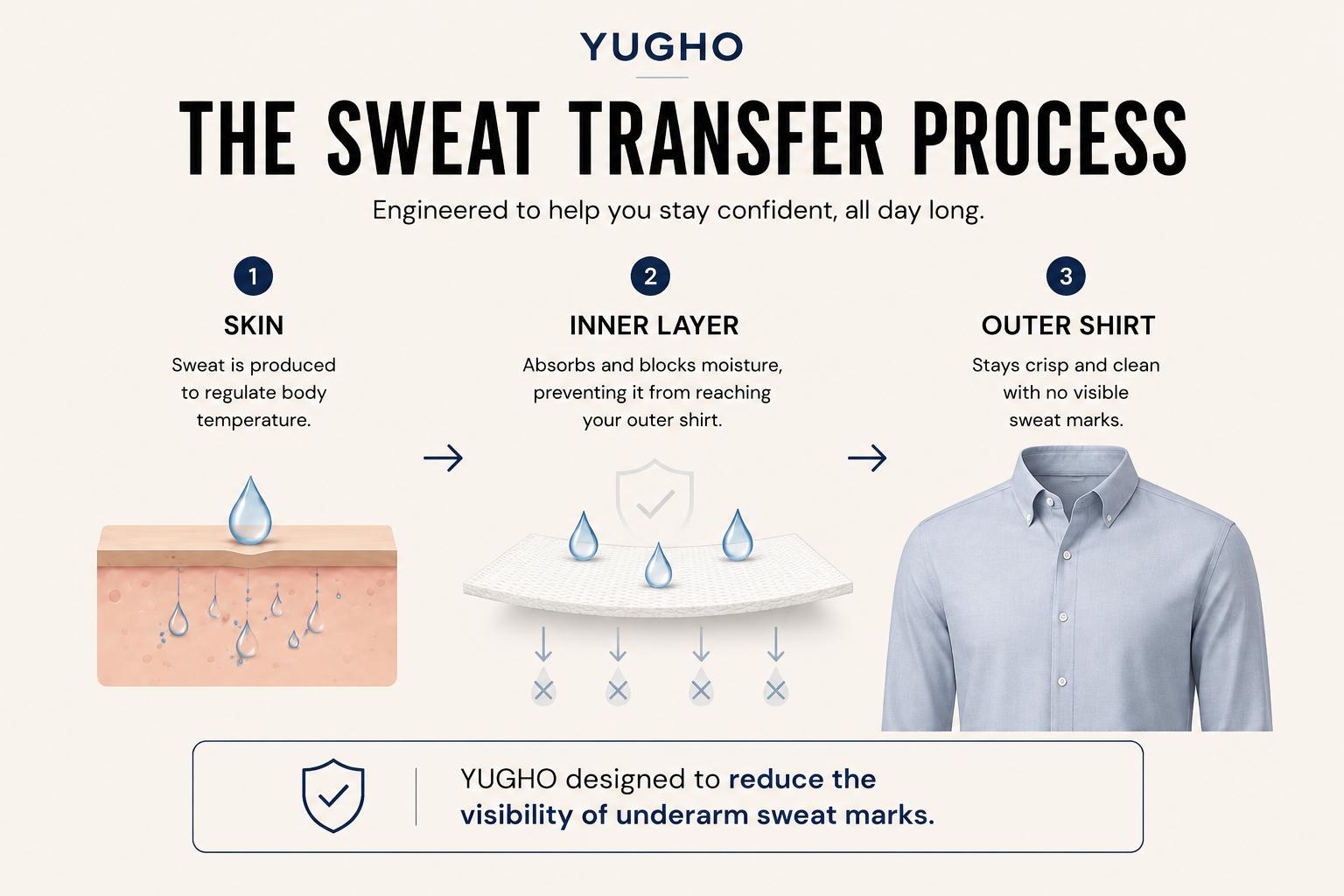
If you want to understand the construction and moisture-transfer principle in more detail:
YUGHO Technology - How It Works
4. Small Changes That Can Make Your Commute More Comfortable
Clothing is only one part of the equation.
A few simple habits can also make a difference to how you feel when you reach work.
Leave a Little Earlier
Rushing can mean walking faster, climbing stairs quickly, or arriving already overheated.
Even a small time buffer can reduce unnecessary exertion during the final part of your journey.
Keep Your Backpack Light
A heavy backpack adds physical strain and can also create a large contact area against your back.
That contact can reduce airflow and trap heat, especially during long walks.
Carry what you actually need whenever possible.
Stay Hydrated
Hydration supports your body's normal temperature regulation and is particularly important when you're spending time in hot conditions.
Give Yourself a Few Minutes Before a Meeting
If your commute ends just before an important meeting, don't necessarily walk straight into the room.
If your workplace allows it, give yourself a few minutes to cool down, freshen up, and settle before starting your workday.
That small transition can make you feel much more prepared.
Frequently Asked Questions
Why do I sweat so much during my daily commute?
A commute can combine several sweat triggers at once, including walking, stairs, humidity, crowded spaces, direct sunlight, carrying a backpack, and rushing. Together, these can increase body temperature and make sweating more noticeable before you reach the office.
What fabric is best for a hot and humid commute?
There isn't one best fabric for everyone. Cotton can provide softness and breathability, linen offers good airflow, and some performance fabrics are designed to move moisture and dry faster. Your commute, climate, activity level, and workplace all matter.
Do undershirts prevent sweat marks?
A regular undershirt can absorb some moisture and create a buffer between your skin and outer shirt, but moisture can eventually pass through as the layer becomes saturated. Sweat-management undershirts are specifically designed to help reduce moisture transfer in areas where sweat marks are commonly visible.
Which shirt colors show sweat marks the most?
Sweat visibility depends on both fabric and color. Mid-tone shades such as grey, light blue, olive, and some pastel colors can make wet areas more noticeable because they create a stronger contrast between wet and dry fabric.
Does a backpack make your back sweat more?
It can. A backpack creates a contact area against your back, reducing airflow and trapping heat. This can make your back feel hotter and sweatier, particularly during long walks or crowded commutes.
Is sweating during a commute normal?
Yes. Sweating during a commute is a normal response, particularly in hot weather, high humidity, after physical activity, or in crowded environments. The practical goal is usually to manage comfort and clothing performance rather than eliminate normal sweating.
Dress for the Journey, Not Just the Office
Your workday doesn't begin when you sit at your desk.
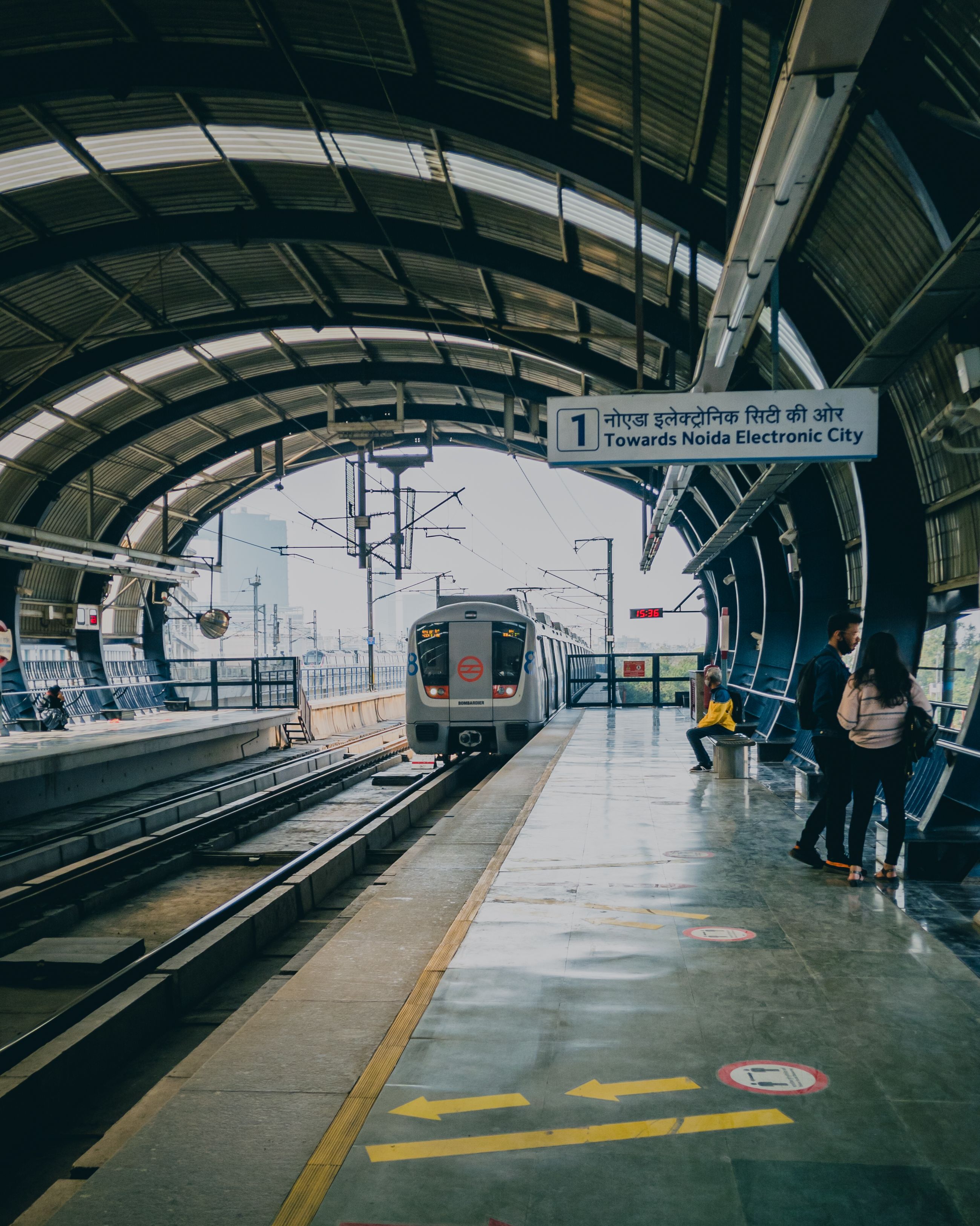
For many professionals, it begins with a walk through the heat, a crowded train, a bus ride, a bike journey, or a few flights of stairs. By the time you reach the office, your clothing has already had to deal with heat, movement, humidity and sweat.
That's why choosing what to wear for work should also mean thinking about how your clothes will perform during the commute.
A breathable fabric can help with comfort. The right color can make sweat less noticeable. A comfortable fit can allow better airflow. And the right base layer can help manage moisture before it reaches your outer shirt.
If visible underarm sweat is the part of your commute that concerns you most, YUGHO's Sweatproof Undershirt is designed specifically to help reduce moisture transfer and visible sweat marks on your outer clothing.
Because dressing for work shouldn't only mean dressing for where you're going.
Dress for how you get there, too.
Experiences From Daily Commuters
★★★★★
“Been using this sweat-proof vest for a while now, and it indeed delivers on what it promises. Given the humid weather in Chennai, this is something that every sweaty person longs for. The fabric feels comfortable and breathable. Overall, it's a practical product that actually works as advertised.”
- Mv Mithun, Verified Customer
★★★★★
“The way product describes it works as expected, sweating is not visible the whole day even when high degree of heat wave. I will recommend it to my friends.”
- Prem Hari Sharma, Verified Customer
About the Author
Hi, I'm Pooja, Founder of YUGHO
With a background in apparel and textile development, I spend my time studying how fabrics, garment construction, and layering systems affect everyday comfort. Through YUGHO, the focus is on creating sweat-management essentials that help people feel more comfortable and confident during real life situations such as commuting, work, presentations, and daily wear. YUGHO was built on a simple belief clothing should solve everyday problems and add genuine value to the people who wear it.
Medical Disclaimer: This article is for educational purposes only and should not be considered medical advice. If excessive or persistent sweating affects your daily life, consult a qualified healthcare professional. Our content is researched using trusted medical sources and evidence-based information.