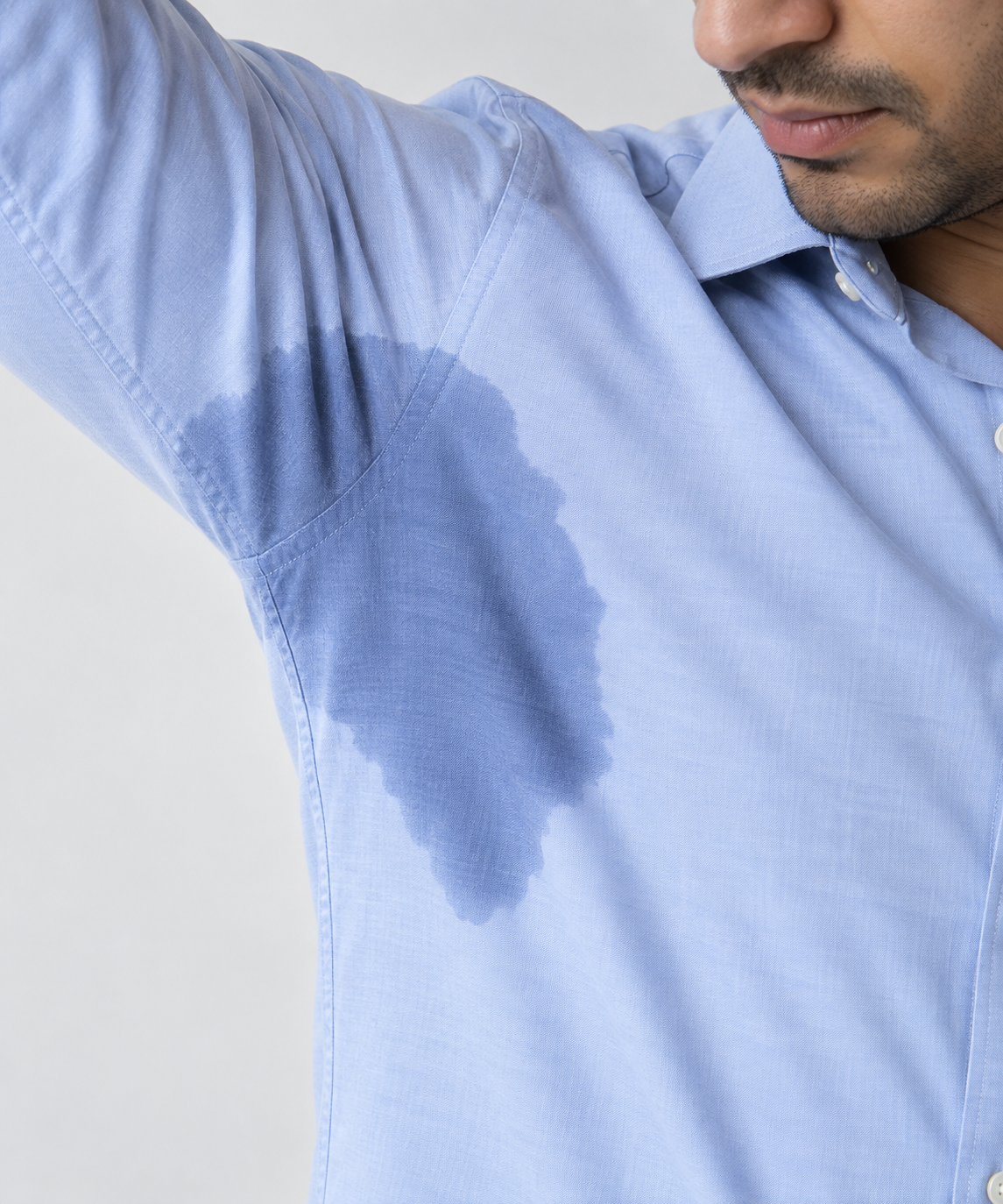
Can antiperspirants make you sweat more? No, antiperspirants are designed to reduce sweating in the area where you apply them. However, you may sometimes feel like you are sweating more after using one.
That feeling can happen for several reasons, including heat, humidity, physical activity, sweating in untreated areas, or expecting an antiperspirant to stop sweating completely.
Quick Answer
No, antiperspirants do not normally make your body sweat more.
Antiperspirants are designed to reduce sweating in the treated area. If you notice more sweat elsewhere, it does not necessarily mean the antiperspirant caused it. You may simply be noticing sweating in other areas more clearly, while heat, humidity, stress, and activity continue to increase normal sweat production.
It is also important to remember that antiperspirants reduce sweating; they do not eliminate it completely.
What Is the Difference Between Deodorant and Antiperspirant?
Deodorant and antiperspirant are designed to address different concerns.
Deodorant primarily helps control body odour. It does not necessarily reduce the amount of sweat your body produces.
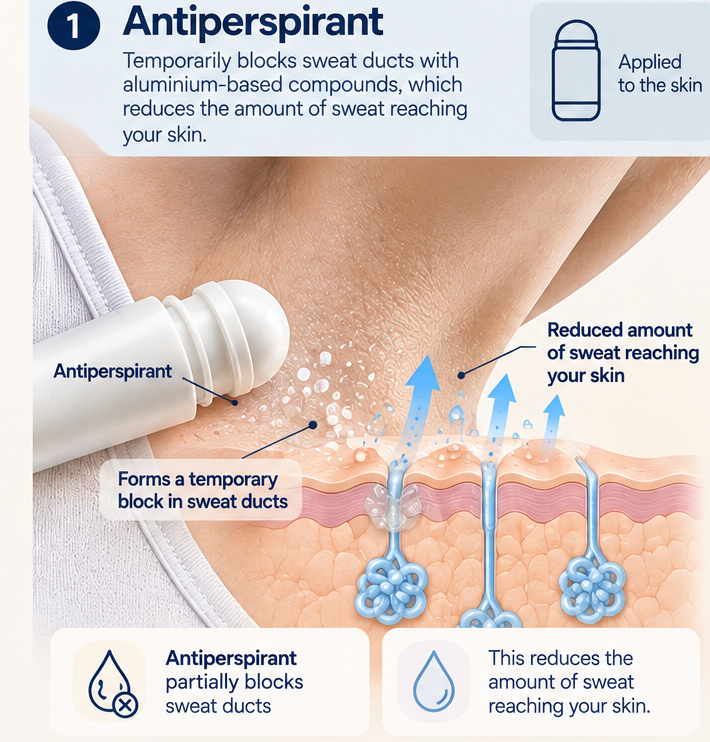
Antiperspirant is designed to reduce sweating in the area where it is applied. It commonly uses aluminium-based active ingredients that temporarily reduce the amount of sweat reaching the skin's surface.
This distinction matters if you are using a deodorant expecting it to reduce sweating. A deodorant may help with odour while having little or no effect on the amount of sweat you produce.
Why Does It Feel Like Antiperspirant Makes You Sweat More?
There are several reasons you may get this impression.
You notice sweat in other areas
If your underarms are noticeably drier after applying antiperspirant, you may become more aware of sweat from other parts of your body.
You might notice moisture on your:
-
Forehead
-
Neck
-
Chest
-
Back
-
Hands
This does not necessarily mean your body has started producing more sweat because of the antiperspirant.
Heat and humidity can increase sweating
Your body naturally produces more sweat when it needs to regulate temperature.
Hot weather, high humidity, exercise and physical activity can all increase sweating. An antiperspirant applied to your underarms does not remove these normal triggers.
This is particularly noticeable in hot and humid conditions, where sweating can continue even when an antiperspirant is working as intended.
Antiperspirant does not stop all sweating
Another common expectation is that an effective antiperspirant should leave you completely dry.
That is not how it works.
Antiperspirants are designed to reduce sweating in the treated area, not eliminate the body's normal sweating response.
You can therefore still sweat during:
-
Exercise
-
Hot weather
-
Long commutes
-
Stressful situations
-
Presentations
-
Other physically demanding activities
Does Antiperspirant Make You Sweat More Elsewhere?
There is a common belief that reducing sweating in one area automatically causes your body to compensate by producing substantially more sweat somewhere else.
For normal antiperspirant use, you should not assume that sweating elsewhere means the product has caused an overall increase in sweating.
If you notice sweating in another area, consider the situation first. Heat, humidity, physical activity and stress can all affect sweat production throughout the body.
The important distinction is between where you notice sweat and whether the antiperspirant has actually increased your overall sweat production.
Can Deodorant Make You Sweat More?
Deodorant itself is not designed to increase sweating.
However, different deodorant products can feel different on the skin, and some people may notice changes in how their underarms feel after applying a particular product.
Also, deodorant and antiperspirant should not be treated as interchangeable.
If your primary concern is sweat reduction, look for an antiperspirant rather than assuming that any deodorant product will reduce sweating.
What Happens to Sweat When You Use Antiperspirant?
Antiperspirant reduces the amount of sweat that reaches the skin's surface in the treated area.
It does not mean that your body suddenly stops producing sweat everywhere.
This is why you can still experience sweating after applying antiperspirant, particularly when your body is responding to heat, exercise or stress.
The effect is local to the area where the product is applied, rather than a complete change to how your body regulates temperature.
How to Get the Most Out of Your Antiperspirant
If you are using an antiperspirant to manage underarm sweating, how and when you apply it can matter.
-
Apply it according to the product's instructions.
-
Apply it to clean, dry skin.
-
Give the product time to work rather than immediately assuming it has failed.
-
Avoid applying it to irritated or damaged skin.
-
If your product instructions recommend a particular application time, follow those instructions.
-
If sweating remains a significant problem despite using an antiperspirant as directed, consider discussing other options with a healthcare professional.
Different formulations have different instructions, so the product label should always take priority.
What If Antiperspirant Reduces Sweat but My Shirt Still Shows Marks?
Reducing the amount of sweat reaching your skin does not automatically mean your outer shirt will remain completely free of visible marks.
Your clothing also affects what happens to the moisture that remains.
Fabric type, colour, fit, garment construction, humidity and the amount of moisture produced can all influence whether sweat becomes visible.
This is where sweat management and sweat reduction become two different problems.
Antiperspirant works on sweating at the skin.
Clothing works on what happens to moisture after it reaches the garment.
Where Does a Sweatproof Undershirt Fit In?
A sweatproof undershirt is not a replacement for antiperspirant. It addresses a different part of the problem.
YUGHO's Sweatproof Undershirt uses Dry Shield Technology in the underarm area to help manage moisture before it reaches the outer shirt.
You can see the construction in detail on the YUGHO Dry Shield Technology page.
For a deeper explanation of how sweatproof construction works, read how sweatproof undershirts work.
Frequently Asked Questions
Can antiperspirant make you sweat more?
No. Antiperspirants are designed to reduce sweating in the area where they are applied. If you notice more sweating elsewhere, consider other factors such as heat, humidity, activity or stress.
Does antiperspirant make you sweat more elsewhere?
Not necessarily. Noticing sweat elsewhere does not mean the antiperspirant caused an increase in sweating. Other areas may simply become more noticeable when your underarms are drier.
Why do I still sweat with antiperspirant?
Antiperspirant reduces sweating rather than eliminating it. Heat, humidity, exercise and stress can still trigger normal sweating.
Can deodorant make you sweat more?
Deodorant is primarily designed for odour control, not sweat reduction. If you want to reduce sweating, an antiperspirant is the relevant product category.
Does antiperspirant make you hotter?
Antiperspirant is not designed to make you hotter. If you feel warmer or sweat more, environmental conditions, activity, clothing and individual responses can all contribute to that feeling.
What is the difference between deodorant and antiperspirant?
Deodorant primarily addresses body odour, while antiperspirant is designed to reduce sweating in the area where it is applied.
Why do I still get sweat marks if my antiperspirant is working?
Antiperspirant and clothing address different parts of the problem. Even reduced sweating can become visible depending on the fabric, colour, fit, humidity and how moisture moves through your clothing.
Experience of our Satisfied Customer
*> ★★★★★
*> “The product achieved its main purpose. Sweat didn’t appear outside the underarm patch, even after using it for almost 6-7 hours in sweaty conditions. It was lightweight, comfortable, and completely blended with my shirt like a regular inner. Great for wearing under formal shirts.”- Naveen Anandan, Verified Customer
*> ★★★★★
*> “The product works exactly as described. Even in high heat, sweat was not visible throughout the day. I would definitely recommend it to my friends and hope to see more variants in the future.”- Prem Hari Sharma, Verified Customer
About the Author
*> Hi, I'm Pooja, Founder of YUGHO
*> With a background in apparel and textile development, I spend my time studying how fabrics, garment construction, and layering systems affect everyday comfort. Through YUGHO, the focus is on creating sweat-management essentials that help people feel more comfortable and confident during real-life situations such as commuting, work, presentations, and daily wear. YUGHO was built on a simple belief: clothing should solve everyday problems and add genuine value to the people who wear it.
Medical Disclaimer: This article is for educational purposes only and should not be considered medical advice. If excessive or persistent sweating affects your daily life, consult a qualified healthcare professional.