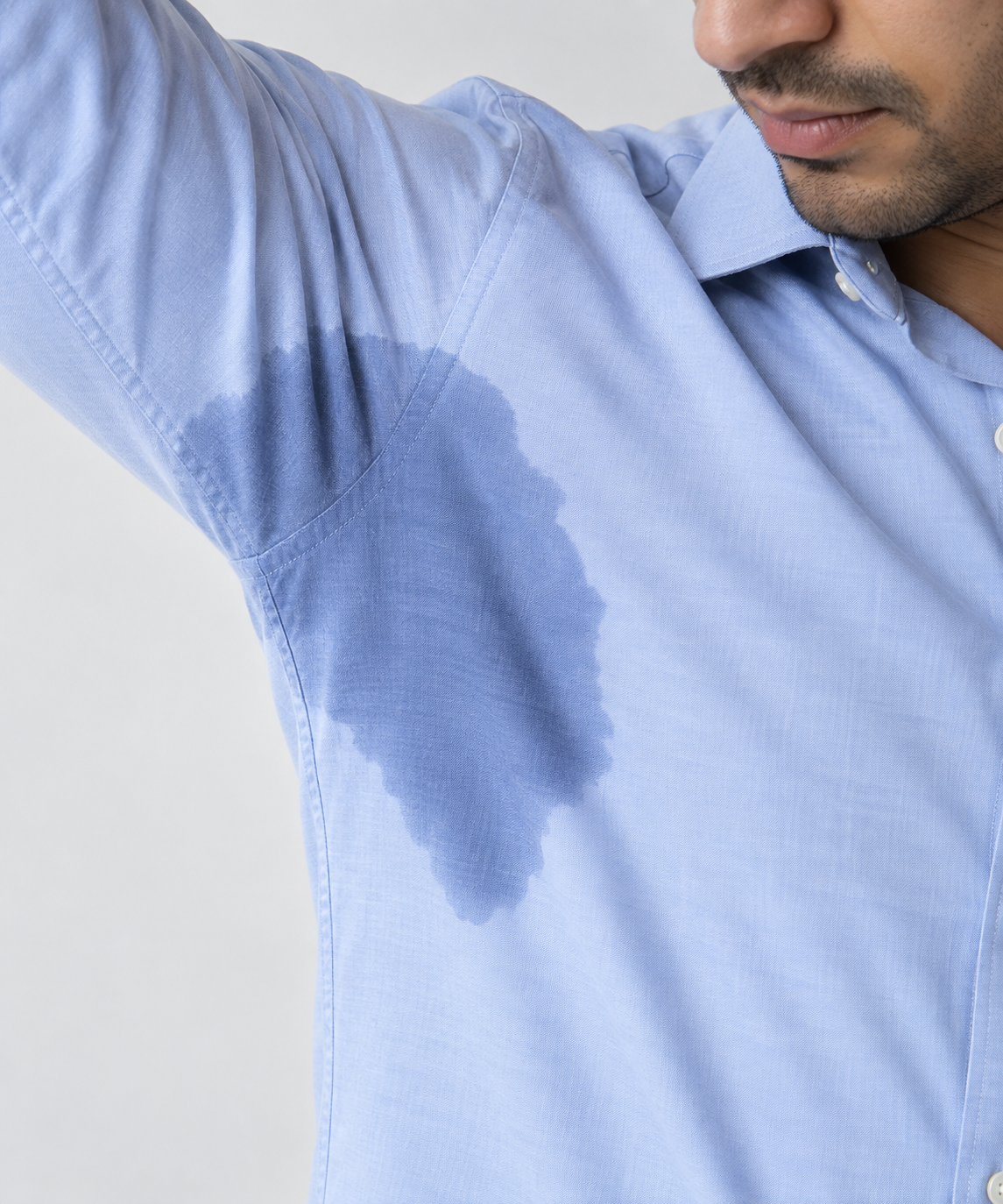
Does wearing an undershirt make you sweat more or feel hotter? Not necessarily. The answer depends mainly on the undershirt's fabric, weight, fit, construction and the conditions you wear it in.
Quick Answer
-
An undershirt does not automatically make you sweat more.
-
A suitable undershirt can be comfortable even when you sweat a lot.
-
A sweatproof undershirt is designed for helping manage underarm moisture and reduce visible sweat transfer to the outer shirt.
-
If your main concern is how hot an undershirt feels, focus on its construction and comfort rather than simply whether you are wearing an extra layer.
Does an Undershirt Make You Sweat More?
No, wearing an undershirt does not automatically make you sweat more.
Your body produces sweat as part of its normal temperature regulation. Wearing another layer does not directly switch your sweat production up or down.
What an undershirt can change is how heat and moisture feel against your skin.
A thick or poorly breathable undershirt may feel warmer because it adds another layer between your skin and the surrounding air. A lightweight, comfortable undershirt can feel very different.
So the important question is not simply:
“Am I wearing an undershirt?”
It is:
“What kind of undershirt am I wearing?”
Do Undershirts Make You Hotter?
They can feel warmer, but that depends on the garment.
An undershirt adds another layer of fabric, so its weight, construction and breathability can affect how much heat you feel.
You are more likely to notice warmth when the undershirt is:
-
Thick or heavy
-
Very tight against the skin
-
Made from a fabric with limited breathability
-
Not suited to the weather
-
Worn underneath several other layers
A lightweight undershirt with a comfortable fit can be much easier to wear in everyday conditions.
The number of layers alone does not tell you whether an outfit will feel hot. The properties of those layers matter.
What Makes an Undershirt Feel Hot?
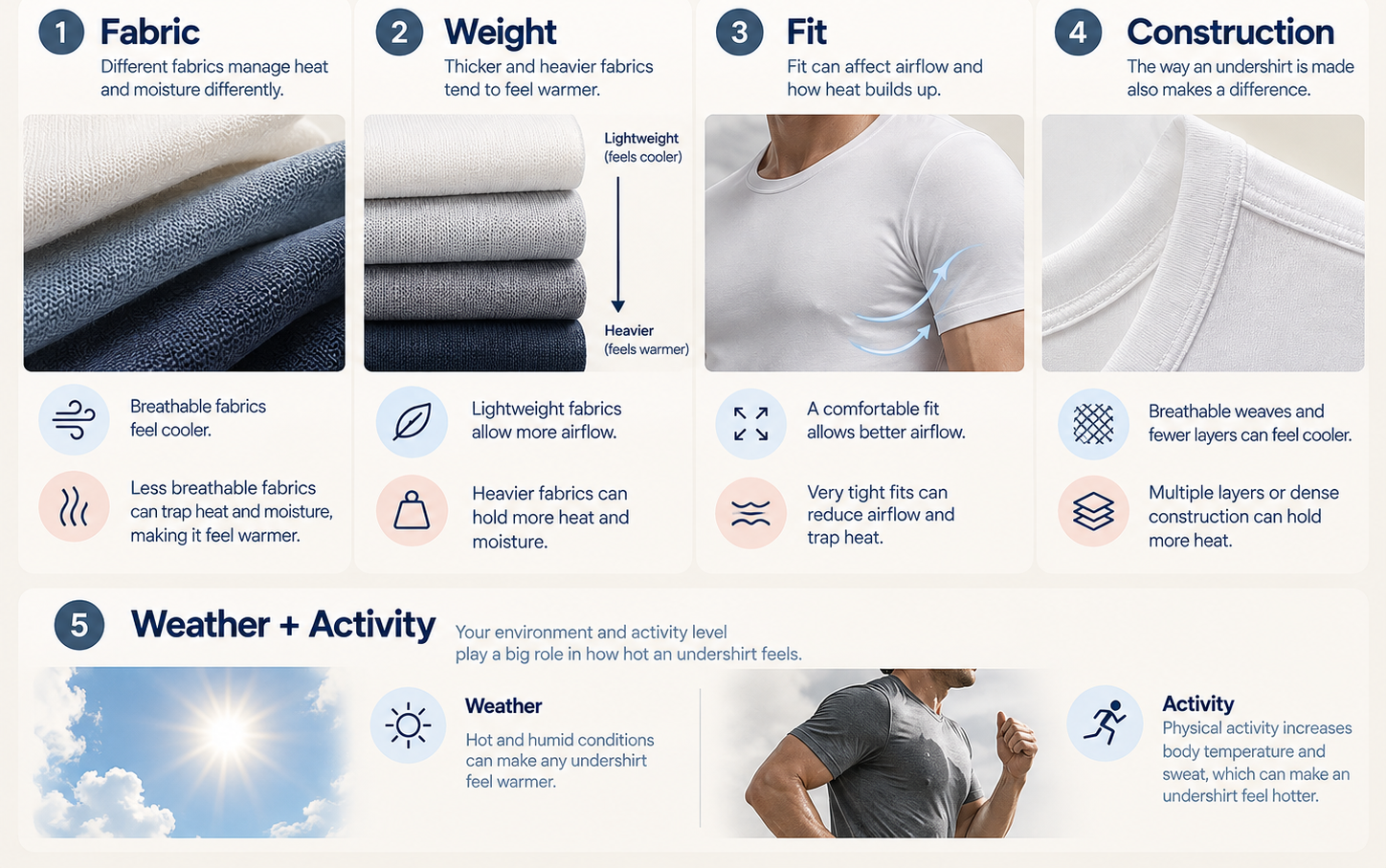
Several factors can affect how warm an undershirt feels.
Fabric
Different fabrics handle heat and moisture differently. A breathable fabric can allow more air movement, while some dense constructions can hold heat closer to the body.
Fabric Weight
A lightweight undershirt generally adds less material than a thick or heavy base layer.
This matters particularly in warm climates where you are already dealing with high temperatures.
Fit
An extremely tight garment keeps fabric closely against the skin and can feel restrictive.
A very loose garment can bunch underneath your outer shirt and become uncomfortable.
For everyday wear, a close but comfortable fit is usually more practical.
Construction
Two undershirts made from similar fibres can feel different because their knit, thickness and overall construction are different.
For a broader explanation of how fabric type, construction and moisture handling affect comfort, see our guide to the best fabrics for people who sweat a lot.
Do Cotton Undershirts Make You Sweat More?
Not automatically.
Cotton is commonly used in everyday undershirts because it is soft and comfortable against the skin. It also absorbs moisture.
However, when cotton becomes heavily saturated, it can remain damp and feel heavier. In hot and humid conditions, that can make the garment feel less comfortable.
That does not mean cotton itself has caused you to sweat more.
The fabric, its weight, construction, climate and how much you are already sweating all matter.
What About a Sweatproof Undershirt?
A sweatproof undershirt should not automatically be assumed to be uncomfortable or excessively warm.
Its purpose is different from a basic undershirt.
A sweatproof undershirt is designed around underarm moisture management and reducing visible sweat transfer to the outer shirt.
YUGHO uses a targeted underarm construction designed to manage perspiration while helping prevent liquid sweat from reaching the outer garment. For better understanding See Video demonstration of our Product
So if your concern is:
"Will a sweatproof undershirt automatically make me hotter?"
The answer is no. Its comfort depends on the actual fabric, fit and construction.
Should I Wear an Undershirt If I Sweat a Lot?
If you sweat a lot, whether you should wear an undershirt depends on what you want the undershirt to do.
If your main concern is feeling hotter, choose a comfortable, breathable and appropriately lightweight garment.
If your main concern is visible underarm sweat marks, a purpose-built sweatproof undershirt may be more relevant because it is designed around that specific clothing problem.
For a closer look at what makes an undershirt useful for sweaty armpits, see our guide to the best undershirt for sweaty armpits in India.
Does an Undershirt Keep You Cool?
An undershirt should not be chosen with the expectation that it will actively cool your body.
Its role in comfort depends primarily on its fabric and construction.
A breathable, lightweight undershirt may feel comfortable in warm conditions, while a heavy or poorly ventilated layer may feel warmer.
So if staying cool is your priority, look at:
-
Fabric breathability
-
Fabric weight
-
Fit
-
Construction
-
Weather conditions
-
The other layers you are wearing
Sweatproof vs Regular Undershirt
A regular undershirt and a sweatproof undershirt are designed with different priorities.
A regular undershirt primarily provides an additional base layer.
A sweatproof undershirt is designed specifically around managing underarm moisture and helping reduce visible sweat transfer to the outer shirt.
If you are deciding between the two, our comparison of sweatproof vs regular undershirts explains the practical differences.
The Simple Answer
If you are worried that wearing an undershirt automatically means you will sweat more, you do not need to look at the problem that way.
An undershirt does not automatically increase sweating.
What matters is whether the particular undershirt is appropriate for your body, clothing and climate.
For hot weather, choose a comfortable and breathable everyday layer.
For visible underarm sweat marks, consider a YUGHO sweatproof undershirt designed specifically to help reduce sweat transfer to your outer shirt.
Frequently Asked Questions
Does an undershirt make you sweat more?
No, not automatically. An undershirt can affect how hot or comfortable you feel, but wearing one does not directly determine how much your body sweats.
Do undershirts make you hotter?
They can feel warmer depending on fabric, weight, fit and construction. A lightweight and breathable undershirt can be more comfortable than a thick or poorly ventilated one.
Do you sweat more with an undershirt?
Not necessarily. Your body controls sweat production based on factors such as temperature, activity and individual physiology. An undershirt mainly changes how heat and moisture feel against your skin.
Should I wear an undershirt if I sweat a lot?
You can, particularly if you want an additional layer between your skin and outer clothing. Choose one based on your main concern, whether that is comfort, moisture handling or visible sweat marks.
Can a sweatproof undershirt make you hotter?
Not simply because it is sweatproof. Comfort depends on the fabric, fit and construction. A sweatproof undershirt is designed primarily to help manage underarm moisture and reduce visible sweat transfer.
What Our Customers Say
★★★★★
“I was embarrassed by underarm sweat marks on my T-shirts. I ordered YUGHO because I was looking for a solution, and the quality is excellent. There are no visible sweat marks on my shirts, and I don’t need to wash them daily. It is also much more affordable than a similar sweatproof T-shirt I bought from the USA. I would recommend YUGHO to anyone worried about visible sweat marks. It has brought my confidence back.” -Nikhil Anand, Verified Customer
★★★★★
“The product works exactly as described. Even in high heat, sweat was not visible throughout the day. I would definitely recommend it to my friends and hope to see more variants in the future.”
- Prem Hari Sharma, Verified Customer
About the Author
Hi, I'm Pooja, Founder of YUGHO
With a background in apparel and textile development, I spend my time studying how fabrics, garment construction, and layering systems affect everyday comfort. Through YUGHO, the focus is on creating sweat-management essentials that help people feel more comfortable and confident during real life situations such as commuting, work, presentations, and daily wear. YUGHO was built on a simple belief clothing should solve everyday problems and add genuine value to the people who wear it.
Medical Disclaimer: This article is for educational purposes only and should not be considered medical advice. If excessive or persistent sweating affects your daily life, consult a qualified healthcare professional. Our content is researched using trusted medical sources and evidence-based information.