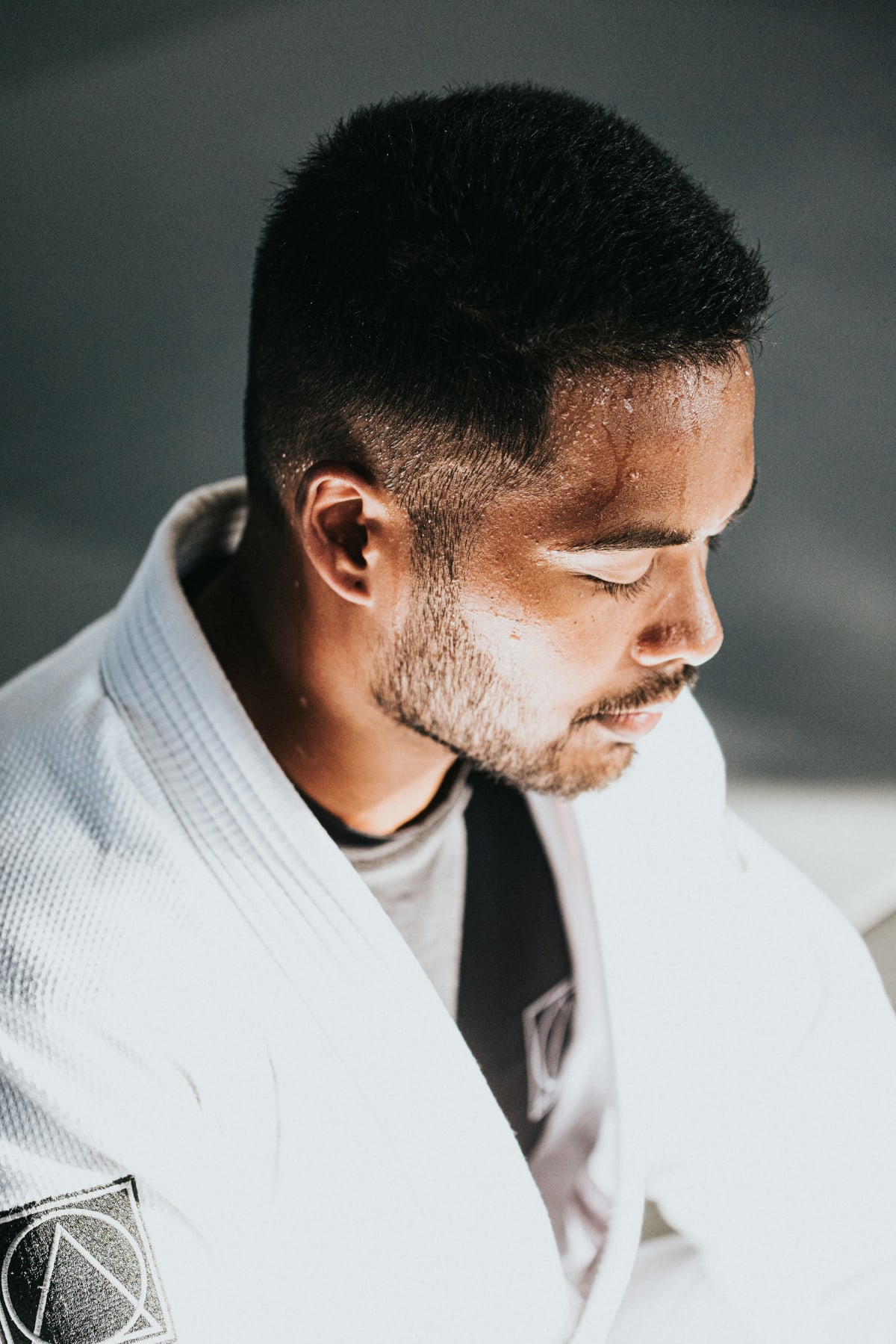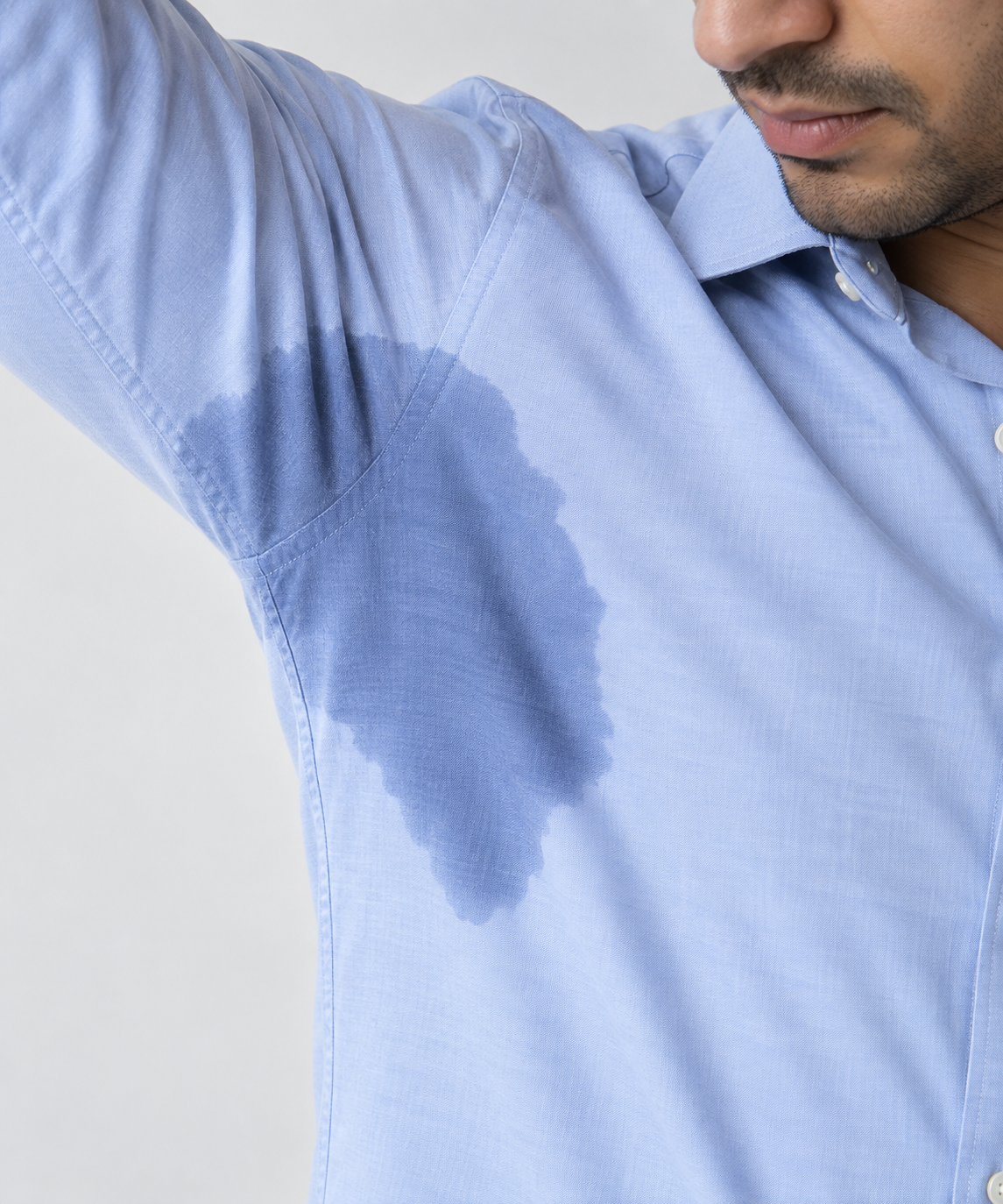
If you sweat a lot, choosing the right fabric can make a noticeable difference to comfort and how visible sweat becomes. But breathability, absorption, moisture-wicking and sweat visibility are different things.
Quick Answer:
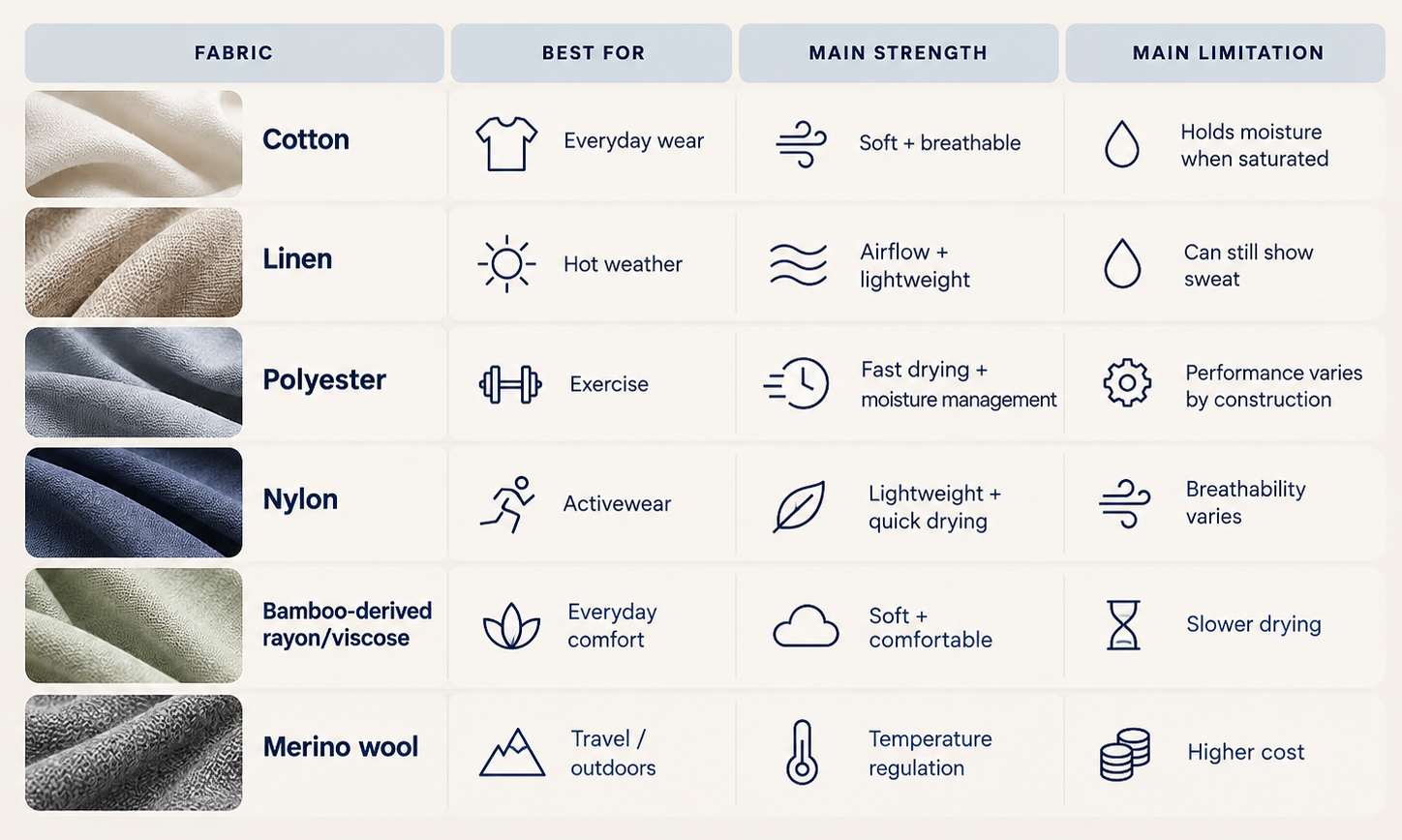
There is no single best fabric for everyone who sweats. Cotton and linen are comfortable and breathable for everyday wear, while performance polyester and nylon are useful when fast drying and moisture-wicking are the priority.
For everyday clothing, the right choice depends on what you need the fabric to do:
For breathability and everyday comfort: Cotton or linen
For fast drying during exercise: Performance polyester or nylon
For softness: Bamboo-derived rayon or viscose
For temperature regulation and natural odour resistance: Merino wool
For reducing visible underarm sweat marks: A suitable outer fabric combined with a dedicated sweatproof undershirt can provide an additional layer of protection
What Makes a Fabric Good for People Who Sweat a Lot?
The fibre itself is only one part of how a fabric behaves when you sweat. Weave, weight, construction and finishing can change how quickly moisture is absorbed, spread or dried.
The main factors to consider are:
-
Breathability: How easily air moves through the fabric. Open or loose constructions generally allow more airflow.
-
Moisture absorption: How much moisture the fibre takes into its structure. Cotton and other cellulose-based fibres absorb moisture readily.
-
Moisture wicking: How moisture moves across the fabric surface to support faster evaporation. This is commonly associated with engineered synthetic fabrics.
-
Drying speed: How quickly the fabric releases the moisture it has absorbed or moved.
-
Comfort when damp: Some fabrics become heavy or cling to the skin when wet, while others remain relatively comfortable.
-
Fabric construction: Weight, weave, knit structure and finishing can significantly change performance, even when two fabrics use the same fibre.
This is why simply looking at a clothing label that says "100% cotton" or "100% polyester" does not tell you everything about how the garment will perform.
How Do Different Fabrics Perform When You Sweat?
Different fabrics solve different problems. A fabric that feels cool and breathable may not dry quickly, while a fast-drying fabric may not provide the same comfort as a natural fibre.
Cotton
Cotton is breathable, soft and comfortable against the skin, which makes it a common choice for everyday clothing.
Cotton absorbs moisture readily, so it can feel comfortable during light or moderate sweating. The limitation appears when the fabric becomes saturated. Cotton can hold onto moisture and dry slowly, which can make a wet garment feel heavier and cause darker sweat patches to become visible.
Pros: Breathable, soft, comfortable for everyday wear
Cons: Absorbs moisture readily, dries slowly when saturated, can show visible sweat marks
Best for: Everyday clothing, office wear and mild to moderate sweating
Linen
Linen is made from flax fibres and is known for its open structure and airflow. This makes it particularly useful for hot weather.
It absorbs moisture and can release it relatively quickly because of its breathable construction. However, linen can still show sweat once enough moisture accumulates in the fabric.
Pros: Breathable, lightweight, good airflow
Cons: Wrinkles easily, limited stretch, can show sweat when sufficiently wet
Best for: Summer clothing, business-casual wear and hot weather
For a more detailed look at linen shirts and sweating in Indian conditions, see our best linen shirts for people who sweat a lot in India guide.
Polyester
Performance polyester is designed to move moisture across the fabric surface and support faster evaporation. This is why it is widely used in sportswear and activewear.
However, polyester is not one uniform category. A performance polyester knit can behave very differently from a basic polyester fabric.
Polyester can also show sweat depending on its colour, construction, weight, fit and the amount of moisture present. Being made from polyester does not automatically make a garment sweatproof or invisible to sweat marks.
Pros: Fast drying, lightweight, durable, effective moisture management in performance constructions
Cons: Performance varies by construction, some polyester fabrics can feel less breathable, some can retain odour
Best for: Exercise, running, sports and other high-activity situations
Nylon Blends
Nylon is lightweight, durable and quick-drying. It is often blended with elastane to add stretch.
On its own, nylon is not necessarily the most breathable option for everyday wear, so its construction and blend are important. It can also show sweat depending on the fabric's colour, weight, construction and moisture level.
Pros: Lightweight, durable, quick-drying, stretchy in blends
Cons: Limited breathability in some constructions, can retain odour
Best for: Activewear, travel clothing and stretch garments
Bamboo-Derived Rayon or Viscose
Most commercially sold bamboo fabric is a regenerated cellulose fibre such as rayon or viscose made from bamboo pulp.
These fabrics are known for softness and comfortable drape. They absorb moisture reasonably well, but they generally do not dry as quickly as performance synthetics.
Pros: Soft, comfortable, good moisture absorption
Cons: Slower drying than performance synthetics, performance varies by fabric and manufacturing process
Best for: Everyday clothing and garments where softness is a priority
Merino Wool
Merino wool manages moisture differently from cotton. Its fine fibres can absorb moisture vapour and help regulate temperature across changing conditions.
It is also naturally more resistant to odour than many common fibres. The main disadvantages are its higher price and the care that some merino garments require.
Pros: Temperature regulation, moisture management, natural odour resistance
Cons: Higher cost, requires more careful care, less commonly available
Best for: Travel, outdoor activities and long days where temperature regulation matters
What Fabric Doesn't Show Sweat?
No single fabric can reliably guarantee that sweat will remain invisible under heavy sweating.
Sweat visibility depends on several factors:
Colour
Dark, saturated colours and many prints can make moisture less noticeable than light or heathered colours, where wet areas can create stronger contrast.
Fabric Weight and Opacity
Lightweight fabrics can make moisture more noticeable because the wet area changes the appearance of a relatively thin layer. Heavier or more opaque fabrics may make moisture less obvious.
Weave and Fabric Construction
Fabric construction affects how moisture spreads through the garment. A dense construction can behave differently from a lightweight open weave, even when both use the same fibre.
Fit
A close-fitting garment presses wet fabric against the skin, which can make sweat marks more visible. A looser garment can create more distance between the skin and outer surface.
Amount of Sweating
The amount of moisture matters. A fabric that looks dry during light sweating may show marks once it becomes more heavily saturated.
So when someone asks for a fabric that doesn't show sweat, the better approach is to consider the complete garment rather than the fibre alone.
Do You Sweat More in Cotton or Polyester?
Neither fabric automatically makes you sweat more.
Your sweat rate is primarily a physiological response. However, the way a garment handles heat and moisture can affect how hot or comfortable you feel.
Cotton can feel comfortable and breathable for everyday wear, but it absorbs moisture and can become damp when heavily saturated. Performance polyester can move moisture across the fabric and dry faster, making it useful for exercise and high-activity situations.
The important distinction is between the fabric changing how sweating feels and the fabric actually changing how much you sweat.
A poorly ventilated polyester garment may feel hotter, but that does not mean polyester itself has caused a higher sweat rate.
What Is the Difference Between Sweat-Absorbing and Sweat-Wicking Fabric?
Sweat-absorbing and sweat-wicking describe different ways of handling moisture.
Sweat-absorbing fabrics take moisture into the fibre structure. Cotton, linen and other cellulose-based fibres can absorb moisture this way.
Sweat-wicking fabrics move moisture across the fabric surface, helping expose it to air so it can evaporate more quickly. This is commonly achieved through specific synthetic fibres, yarn structures, knits and fabric finishes.
Neither term means that the fabric stops sweating.
For a more detailed comparison of these two approaches, read our sweatproof vs moisture-wicking fabric guide.
What Should You Wear If You Sweat a Lot?
The best clothing setup depends on where and when you sweat.
Everyday and Office Wear
For normal daily activities, a breathable cotton or linen outer garment can provide comfort. If visible underarm sweat marks are the main concern, the layer underneath becomes important as well.
Our best undershirt for sweaty armpits guide explains what to consider when choosing an undershirt for this specific problem.
Hot and Humid Weather
Choose lightweight, breathable clothing that allows airflow and does not fit too tightly.
Fabric choice should focus on both comfort and how visible moisture becomes. Staying cool and reducing visible sweat marks are related, but they are not the same problem.
Exercise and High-Sweat Activities
For workouts and sports, performance polyester and nylon are commonly used because they can move moisture across the fabric and dry quickly.
The best fabric for exercise does not necessarily make the best fabric for office wear.
When Visible Sweat Marks Are the Main Concern
If the main issue is not how much you sweat but how visible the sweat becomes on your shirt, fabric selection alone may not solve the problem.
A suitable outer fabric can help, but layering can provide another way to manage visible underarm moisture.
What If Your Main Problem Is Visible Sweat Marks?
Sweating is a normal physiological process, and clothing should not be presented as something that stops it.
If the main concern is visible underarm sweat marks, the goal is different. Instead of trying to control sweating itself, the clothing system can be designed to manage where moisture appears.
YUGHO's sweatproof undershirt uses a layered construction designed to help prevent visible underarm sweat marks from reaching the outer shirt.
See the Difference for Yourself
Fabric descriptions are useful, but garment construction also matters.
YUGHO's technology page includes a water demonstration comparing a YUGHO sweatproof undershirt with a regular undershirt. The demonstration is intended to show how the different garment constructions handle moisture.
Frequently Asked Questions
What Is the Best Fabric for Sweaty Armpits?
There is no single best fabric for every situation. Linen and breathable cotton can work well for everyday comfort, while performance polyester and nylon are useful for activities where fast drying matters.
If visible underarm sweat marks are the main concern, the outer fabric alone may not be enough. Layering can also affect how visible moisture becomes.
What Material Absorbs Sweat the Best?
Absorption depends on the fibre and fabric construction. Cotton and other cellulose-based fibres absorb moisture readily, while the overall performance also depends on fabric weight, construction and how much moisture is present.
Absorbing more moisture does not necessarily mean that the fabric will dry faster or hide sweat better.
Is Cotton Good for Sweating?
Cotton can be comfortable and breathable for everyday wear and moderate sweating. However, it absorbs moisture and can hold onto it when saturated, which can make the garment feel damp and show visible sweat marks.
Is Polyester Good for Sweating?
Performance polyester can work well when fast drying and moisture management are important, particularly during exercise.
However, ordinary polyester is not automatically a high-performance moisture-wicking fabric. Construction matters.
Does Nylon Show Sweat?
Nylon can show sweat depending on its colour, construction, weight, fit and the amount of moisture present. Its quick-drying properties can be useful for activewear, but nylon should not be treated as automatically sweatproof.
Is Linen Good for Sweaty People?
Linen can be a good choice for hot weather because it is lightweight and breathable. It absorbs moisture and allows good airflow, but it can still show sweat when enough moisture accumulates.
What Fabric Shows Sweat the Least?
No single fabric guarantees invisible sweat marks. Colour, fabric weight, opacity, weave, fit and the amount of sweating all influence visibility.
If visible underarm marks are the main concern, consider the complete clothing system rather than choosing a fabric based only on fibre type.
What Our Customers Say
★★★★★ 5/5 "Soft, comfortable, and effective. I noticed a significant reduction in visible underarm sweat marks, even after a long day. Highly recommended!" - Rukesh Hari Sharma
★★★★★ 5/5 "Wore it all day while driving, walking, and shopping, and my shirt stayed free from visible underarm sweat marks. Comfortable, reliable, and truly useful." - Padmanabhan R.
About the Author
Hi, I'm Pooja, Founder of YUGHO
With a background in apparel and textile development, I spend my time studying how fabrics, garment construction, and layering systems affect everyday comfort. Through YUGHO, the focus is on creating sweat-management essentials that help people feel more comfortable and confident during real-life situations such as commuting, work, presentations, and daily wear. YUGHO was built on a simple belief: clothing should solve everyday problems and add genuine value to the people who wear it.
Medical Disclaimer: This article is for educational purposes only and should not be considered medical advice. If excessive or persistent sweating affects your daily life, consult a qualified healthcare professional. Our content is researched using trusted medical sources and evidence-based information.