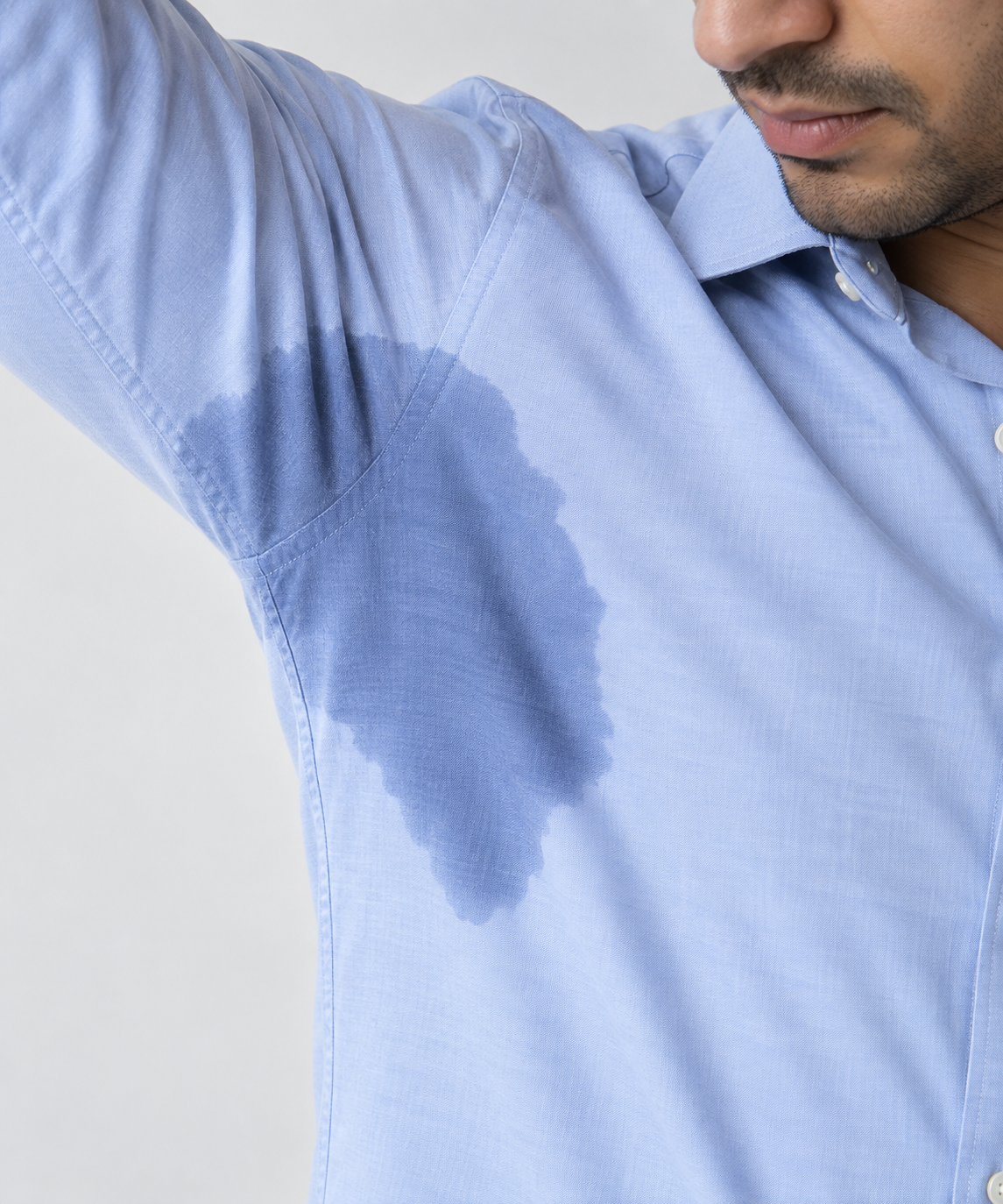
You're in an air-conditioned meeting room, and everyone around you looks completely comfortable. Meanwhile, you can already feel dampness forming under your arms. Or you've walked a short distance to work while your friends barely broke a sweat, and your shirt is already showing marks.
If you've ever wondered why you seem to sweat more than everyone else, you're not alone and it doesn't automatically mean something is wrong. Everyone's body regulates temperature differently, and the difference usually comes down to genetics, hormones, stress, underlying health factors, and daily habits, often in combination.
This guide walks through why some people naturally sweat more, when it crosses into hyperhidrosis, the everyday triggers worth knowing about, and what actually helps.
Quick Answer
Sweating more than others usually comes down to a mix of genetics, an overactive sympathetic nervous system, hormones, stress, or your daily habits not a sign that something is wrong.
It becomes hyperhidrosis when sweating happens without heat or exercise as a trigger, soaks through clothing regularly, or interferes with daily life. That's worth checking with a doctor.
Diet and stress adjustments can help if caffeine, spicy food, alcohol, or anxiety are your personal triggers. Breathable and sweat-management clothing won't reduce how much you sweat, but it can reduce how visible it is.
How Sweating Works
Your body has two main types of sweat glands, and understanding the difference explains a lot about why sweating doesn't always match the temperature in the room.
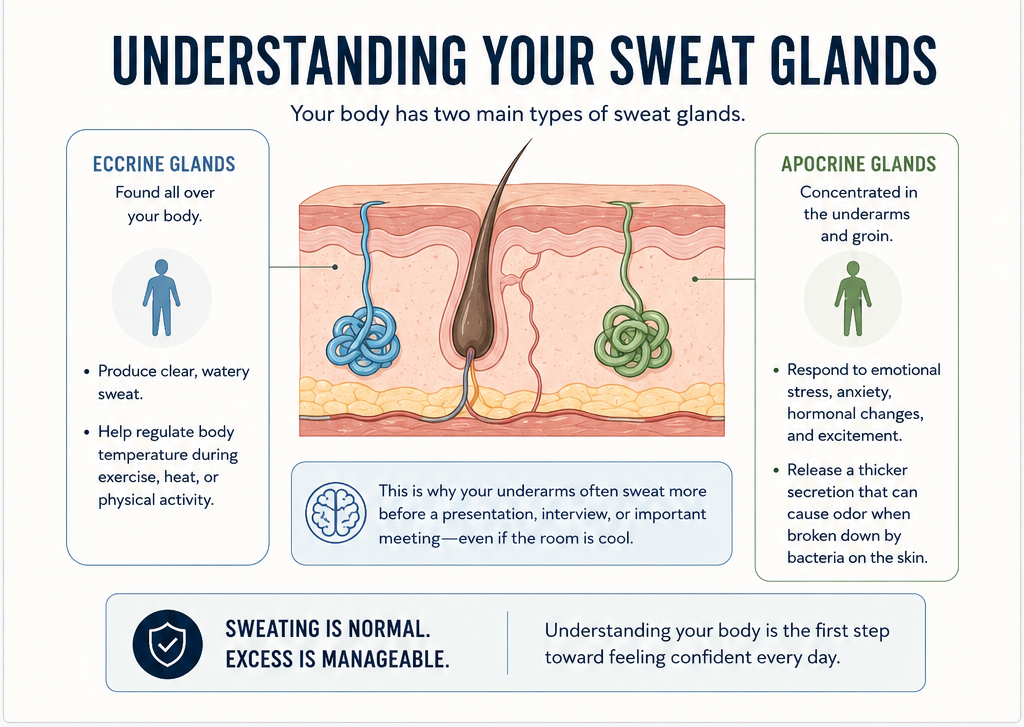
Eccrine glands are spread across almost your entire body. They produce a clear, watery sweat whose job is temperature regulation - this is what kicks in during exercise, heat, or exertion.
Apocrine glands are concentrated in the underarms and groin. They respond less to temperature and more to emotional stress, anxiety, excitement, and hormonal shifts. Their secretion is naturally odorless; body odour only develops when bacteria on your skin break it down.
This is why your underarms can start sweating before an important presentation, even in a cool room that's apocrine activity responding to stress, not heat.
It also explains why underarm sweat is usually the area people are most self-conscious about. Eccrine sweat, spread across the body, tends to be less noticeable because it's dilute and evaporates quickly. Apocrine sweat is concentrated in a smaller area, produced in bursts tied to emotion rather than exertion, and shows up exactly where it's hardest to hide which is why a stressful meeting can leave a visible mark even on a cool day when the rest of your body barely feels warm.
Why Some People Sweat More Than Others
There's rarely a single cause. For most people, it's a combination of the following.
Genetics. Primary focal hyperhidrosis tends to run in families. If one or both parents sweat heavily, you're more likely to as well. It doesn't signal poor health - it just means your sweat response is naturally more active than average.
An overactive sympathetic nervous system. Your sympathetic nervous system controls the fight-or-flight response. In some people, it reacts more strongly than necessary, sending signals to the sweat glands even when the body doesn't need cooling. This is one of the more common reasons behind excessive underarm sweating during ordinary daily activities.
Primary hyperhidrosis. If you regularly sweat through your clothes without exercise or heat as a trigger, this may be the reason. Unlike normal sweating, it isn't caused by temperature the nerves controlling the sweat glands are simply overactive, usually affecting the underarms, hands, feet, or face. It often starts in childhood or adolescence and can continue into adulthood. If you've always been the sweaty one in your family or friend group, this is frequently why.
When It's Something Else: Secondary Hyperhidrosis
Not all excessive sweating is genetic. Sometimes it's your body flagging another underlying factor. This is called secondary hyperhidrosis, and unlike the primary form, it tends to affect larger areas of the body and often develops later in life.
Thyroid disorders. An overactive thyroid raises your metabolism, which generates more body heat and increases sweating.
Hormonal changes. Pregnancy, menopause, and puberty can all affect how your body regulates temperature, often increasing sweat production.
Diabetes. Low blood sugar can trigger sudden sweating, since your body releases adrenaline to raise glucose levels.
Certain medications. Antidepressants, blood pressure medication, diabetes medication, and some pain medications list excessive sweating as a side effect. If sweating increased noticeably after starting a new medication, it's worth raising with your doctor before making any changes yourself.
Anxiety and stress. This is one of the most common everyday triggers. Nervousness activates the sympathetic nervous system, which stimulates the apocrine glands - which is why heavy underarm sweating tends to show up before interviews, presentations, exams, or first dates. It's a different mechanism from heat-triggered sweating entirely, which is why staying in a cool room doesn't necessarily help.
Everyday Habits That Can Increase Sweating
Beyond biology, daily habits play a bigger role than most people realise.
- Caffeine stimulates your central nervous system. If sweating tends to pick up after your morning coffee, that's likely why.
- Spicy food contains capsaicin, which tricks your brain into registering overheating, triggering a cooling sweat response.
- Alcohol widens blood vessels near the skin, making you feel warmer and prompting sweat as a cooling response.
- Hot, humid weather slows evaporation. When sweat can't evaporate efficiently, your body compensates by producing more of it.
- Fitness level somewhat counterintuitively, affects onset - physically fit people often start sweating earlier during exercise, simply because their bodies have become more efficient at temperature regulation. It's not a sign anything's wrong.
None of these need to be eliminated outright. If you're trying to reduce sweating triggered by lifestyle factors, it's usually more useful to identify which one or two actually apply to you a morning coffee, an evening drink, a particular meal rather than cutting all of them at once and losing track of what actually made a difference.
Could Your Clothes Be Part of the Problem?
Clothing won't change how much your body sweats, but it can change how much you feel it - and how visible it becomes.
Heavy or non-breathable fabric traps heat close to the skin, which can make you feel warmer and sweat more than you would in breathable clothing. And if visible sweat marks are the actual concern rather than the sweating itself, what you wear underneath your shirt matters more than most people account for.
For more on how sweat-management fabric works and what makes a fabric genuinely breathable
When Sweating Becomes a Clothing Problem
You can't always control how much you sweat. Genetics, stress, your nervous system, hormones, and everyday conditions can all influence your body's sweat response. But while you may not be able to control the amount of sweat, you can control how much of it becomes visible on your clothing.
That's where clothing can play a role.
If you've already tried adjusting your habits, managing stress, or choosing more breathable fabrics but still find yourself checking your shirt for visible underarm marks, a sweat management layer can help.
YUGHO's Sweatproof Undershirt with Dry Shield Technology designed to help reduce the visibility of underarm sweat marks by managing where moisture goes, while allowing your body to continue its natural cooling process.
See How YUGHO's Sweatproof Undershirt actually works
FAQ
Is it normal to sweat more than other people?
Yes. Genetics, fitness level, body composition, hormones, stress, medications, and environment all affect how much a person sweats. Sweating more than someone else next to you doesn't automatically mean a medical condition.
Why do I sweat even when I'm not hot?
Sweating isn't only heat-triggered. Emotional stress, anxiety, hormonal shifts, certain medications, and primary hyperhidrosis can all cause sweating in a cool room.
How do I know if I have hyperhidrosis?
Signs include sweating without exercise or heat as a trigger, sweat that interferes with daily activities, or sweat that regularly soaks through clothing. A healthcare professional can determine whether it's primary or secondary hyperhidrosis and what, if anything, needs treatment.
Can anxiety make me sweat more?
Yes. Anxiety activates the sympathetic nervous system, which stimulates the apocrine glands concentrated in the underarms - which is why sweating often spikes before interviews, presentations, or exams.
Can changing my diet reduce sweating?
It can help if caffeine, spicy food, or alcohol are personal triggers for you. It won't resolve a medical condition like hyperhidrosis on its own.
Should I see a doctor for excessive sweating?
Yes, if sweating starts suddenly, happens mainly during sleep, comes with symptoms like unexplained weight loss or fever, or is significantly affecting your daily life. These can point to an underlying condition worth evaluating.
Sweating More Than Others
There isn't one single reason why some people sweat more than others. Your genetics, nervous system, hormones, stress levels, medications, fitness, and environment can all influence how much you sweat. Sometimes it's simply the way your body naturally responds; in other cases, persistent or unusual sweating may be linked to hyperhidrosis or another underlying condition.
The important question is whether the sweating is normal for you or interfering with your daily life. If your sweating has suddenly increased, happens without an obvious trigger, or regularly affects your work, social life, or daily activities, it's worth speaking with a healthcare professional.
But if you understand why you sweat more and your main frustration is visible sweat marks on your clothes, that's a different problem and one that clothing can help you manage.
YUGHO's Sweatproof Undershirt is designed for that specific gap helping reduce visible underarm sweat marks so you can get through your workday, commute, presentation, or everyday routine without constantly thinking about what's showing on your shirt.
What Our Customers Say
⭐⭐⭐⭐⭐ "Been using this sweat-proof vest for a while now, and it indeed delivers on what it promises. Given the humid weather in Chennai, this is something that every sweaty person longs for. The fabric feels comfortable and breathable." - Mv Mithun, Verified Customer
⭐⭐⭐⭐⭐ "The way the product is described, it works exactly as expected. Sweating is not visible throughout the day, even during periods of extreme heat." - Prem Hari Sharma, Verified Customer
About the Author
Hi, I'm Pooja, Founder of YUGHO
With a background in apparel and textile development, I spend my time studying how fabrics, garment construction, and layering systems affect everyday comfort. Through YUGHO, the focus is on creating sweat-management essentials that help people feel more comfortable and confident during real-life situations such as commuting, work, presentations, and daily wear. YUGHO was built on a simple belief: clothing should solve everyday problems and add genuine value to the people who wear it.
Medical Disclaimer: This article is for educational purposes only and should not be considered medical advice. If excessive or persistent sweating affects your daily life, consult a qualified healthcare professional. Our content is researched using trusted medical sources and evidence-based information.