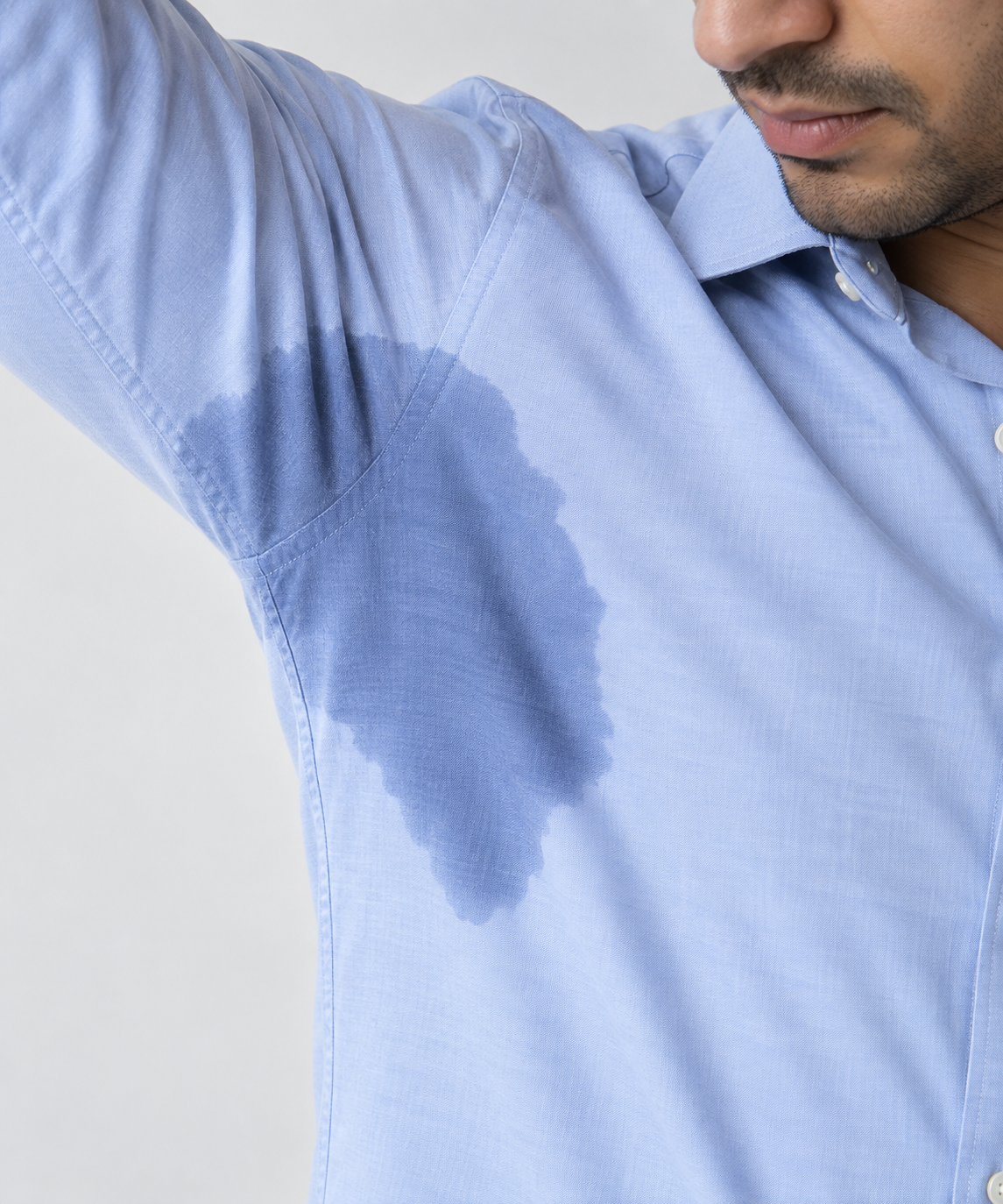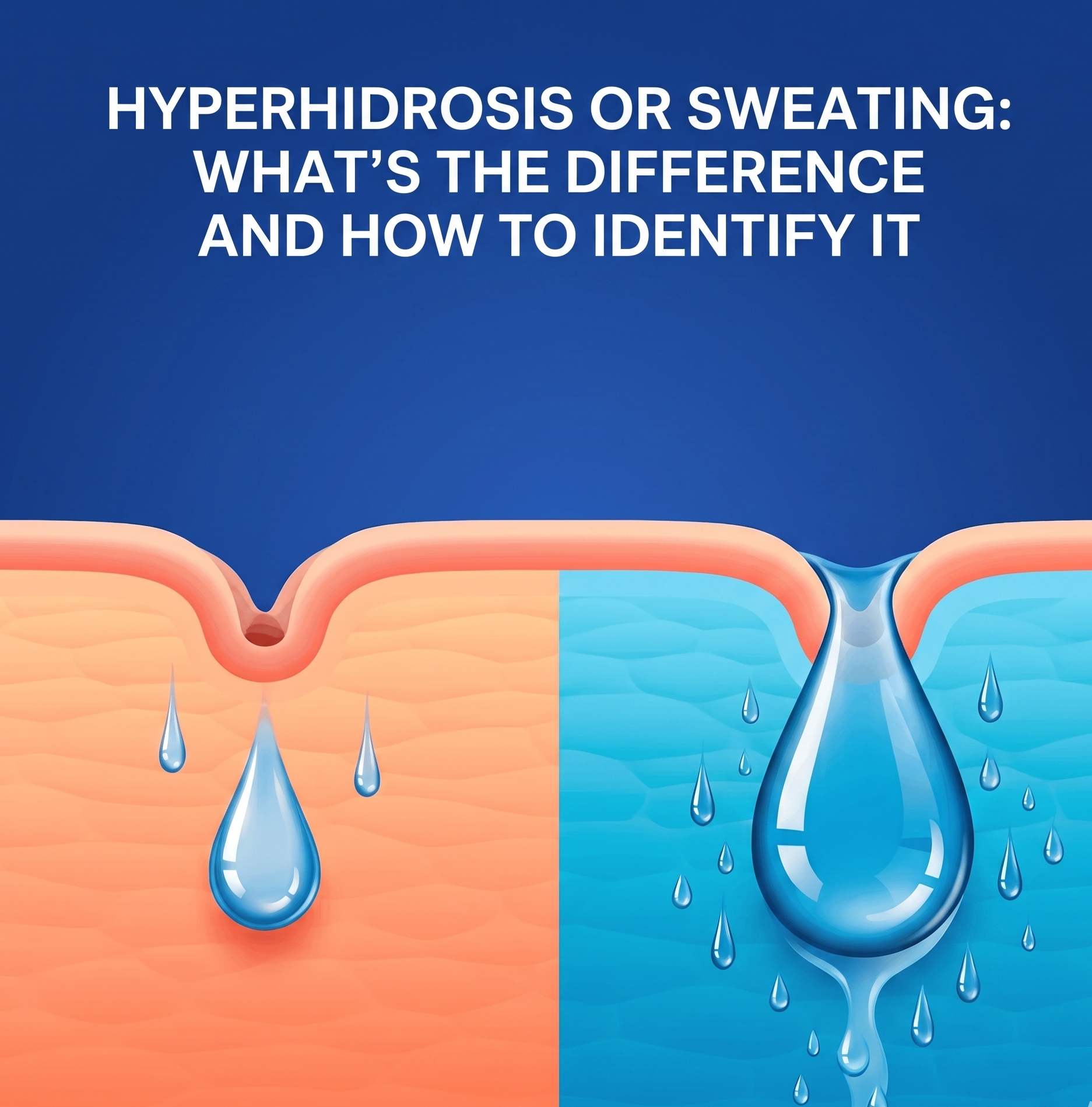
Stepping into the heat or a crowded metro commute, everyone sweats it's a necessary biological response, not a flaw. But if your dress shirts are soaked while you're sitting in a freezing, air-conditioned office, with no clear trigger in sight, that's a different situation entirely.
Here's how to actually tell the two apart, and what to do about it.Stepping into the heat or a crowded metro commute, everyone sweats it's a necessary biological response, not a flaw. But if your dress shirts are soaked while you're sitting in a freezing, air-conditioned office, with no clear trigger in sight, that's a different situation entirely.
Here's how to actually tell the two apart, and what to do about it.
Quick Answer
Normal sweating has a clear trigger heat, exertion, stress and settles once you've cooled down.
Hyperhidrosis often shows up without an obvious trigger, involves soaking through clothes or visible dripping while at rest, and tends to affect both sides of the body equally. If that second description sounds like you, it's worth a conversation with a doctor rather than more antiperspirant.
What Counts as Normal Sweating?
Sweating is your body's built-in cooling system your nervous system triggers it automatically when internal temperature rises. A few things mark it as normal:
- A clear trigger. It happens for a logical reason: exertion, heat, or temporary emotional stress.
- An expected volume. A damp back or underarms after a brisk walk is typical, and it fades once your body cools down.
- Easy to manage. For most people, breathable fabric is genuinely enough to stay comfortable through it.
What Is Hyperhidrosis?
Hyperhidrosis is excessive sweating that goes well beyond what your body actually needs for temperature regulation the sweat glands are essentially working in overdrive. It falls into two categories:
Primary hyperhidrosis isn't linked to another medical condition. It's usually caused by nerve signals that overstimulate the sweat glands, and according to the Indian Journal of Dermatology, it most often shows up in specific, localized areas typically the underarms or palms.
Secondary hyperhidrosis develops as a side effect of another condition, such as diabetes or thyroid issues, or as a reaction to certain medications.
How to Tell the Difference
If you're unsure whether your sweating is ordinary or something more, three things are worth checking.
Timing. Normal sweating needs a catalyst heat, stress, exertion. Hyperhidrosis often shows up unpredictably, including in cool environments or while you're simply sitting still.
Volume. Soaking through your clothes entirely, or noticing visible beads of sweat while at rest, isn't typical physiological sweating even for someone who runs "sweatier" than average.
Symmetry. Primary hyperhidrosis usually affects the body symmetrically roughly equal moisture on both underarms or both palms, for example, rather than one side more than the other.
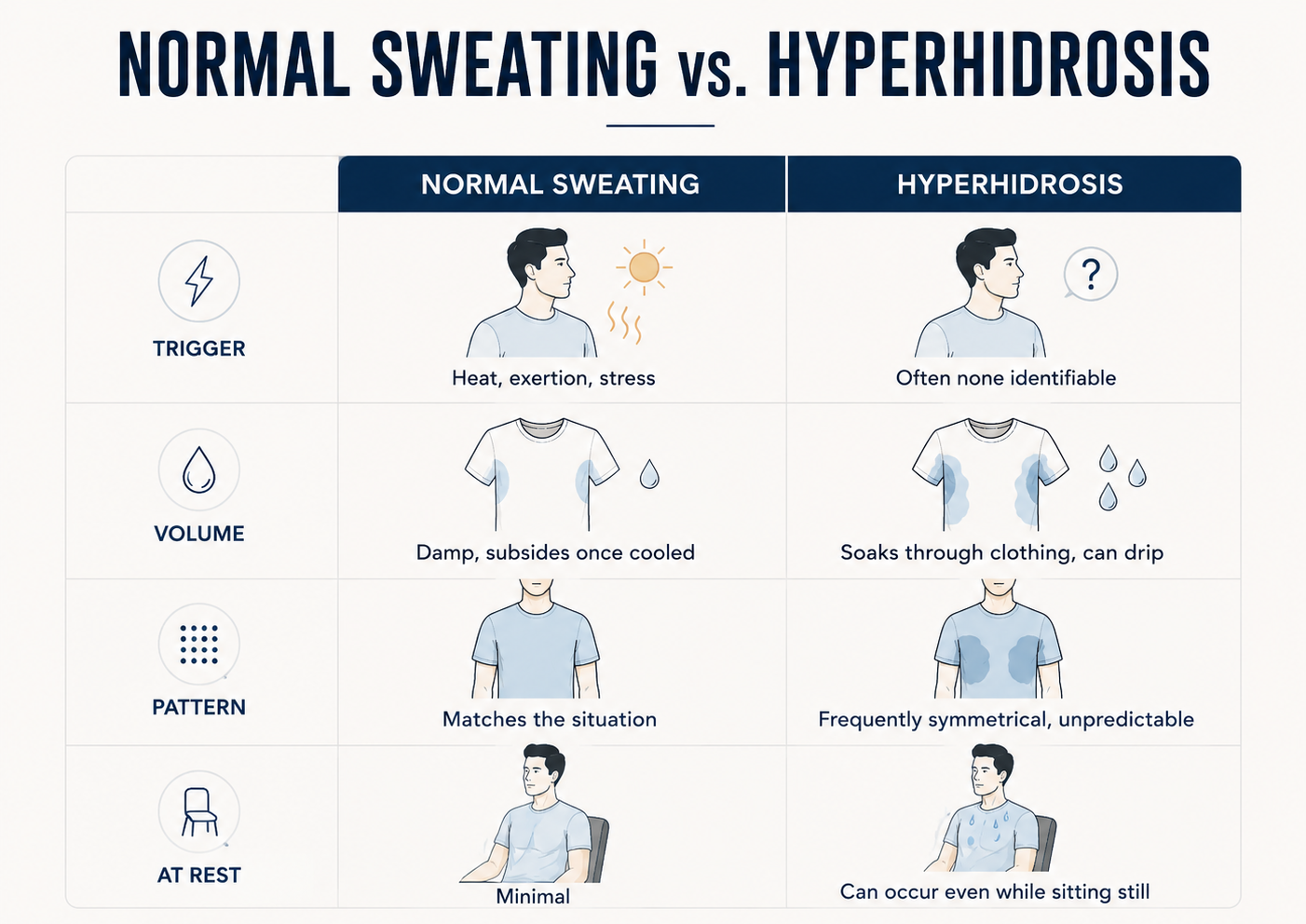
If most of what you're describing falls on the left side of that table, you're dealing with ordinary sweating that's simply more noticeable than you'd like. If it leans right, particularly on volume and unpredictability, that's a conversation worth having with a doctor.
What Happens If You See a Doctor
If your symptoms point toward hyperhidrosis, a doctor typically starts with your history when it started, which areas are affected, and whether anything seems to trigger it before moving to a physical exam. In some cases, a simple starch-iodine test can visually map the affected area, since it's a quick way to confirm the pattern without anything invasive.
If secondary hyperhidrosis is suspected meaning another condition might be driving it bloodwork can check for things like thyroid function or blood sugar. From there, treatment options range considerably clinical-strength antiperspirants, prescription medication, and procedures like iontophoresis or Botox injections for more localized, severe cases. None of this is something to self-diagnose your way through the point of seeing a doctor is finding out which category you're actually in, since primary and secondary hyperhidrosis are treated differently.
Managing Visible Sweat Marks, Either Way
Whether you're dealing with hyperhidrosis or just sweating more than you'd like in a hot, humid climate, managing how it shows usually takes more than antiperspirant alone. What you're wearing has real influence over whether that moisture ever reaches your outer shirt.
YUGHO's base layer is built around that specific problem a 95% cotton, 5% spandex blend with Dry Shield Technology in the underarm zone, designed to reduce moisture transfer to your outer garment while staying comfortable for everyday wear.
For the full explanation of how sweatproof clothing works, see .
Watch the YUGHO's Product demonstration
FAQ
Is sweating every day normal? Yes. It's a natural function that regulates internal temperature, commonly triggered by exercise, heat, emotional stress, or spicy food.
Can hyperhidrosis develop later in life? Primary hyperhidrosis usually begins in childhood or adolescence. Secondary hyperhidrosis can develop later, as a result of a medical condition or medication.
Which parts of the body are most commonly affected? Most often the underarms, palms, soles of the feet, and face, though it can occur elsewhere.
Is antiperspirant enough to prevent sweat marks? Not always. It reduces sweating at the application site, but fabric choice, layering, and garment construction all affect whether moisture becomes visible on your outer clothing.
Can clothing treat hyperhidrosis? No. Clothing can't treat the condition, but well-designed clothing can help manage visible sweat marks and improve day-to-day comfort alongside medical treatment.
When should I see a doctor about excessive sweating? If it happens without heat or exertion as a trigger, interrupts your daily life, or starts suddenly - a doctor can properly evaluate and diagnose what's going on.
Everyone Sweats Knowing Which Kind Is What Matters
Sweating is normal and necessary. It's only worth flagging to a doctor when it becomes excessive, unpredictable, or starts interfering with your daily life. Either way, visible sweat marks don't have to be something you manage by avoiding light colours or holding your arms differently that's a problem YUGHO can genuinely help with, separate from whatever's driving the sweat in the first place.
See Our Happy Customer Review
★★★★★
“I was suffering from underarms sweat and it makes me feel embarrassing to see sweat marks in my tshirt, then I came to know about YUGHO sweatproof tshirt and I ordered it straight away as I was looking for such products which can solve my this problem… there is no stain mark in my shirts… If someone sufferings from sweat and worried about sweat marks in their shirt, without a second thought just order YUGHO.”
- Nikhil Anand Verified Customer
★★★★★
“Justified the main motive.! Sweat didn't appear outside the underarm patch.! The product is light weight to wear.! Used it for almost 6-7 hours under sweat condition.! Zero visibility of sweat in the underarm. It completely blended with my shirt inside, just like every inner. Extremely great to cover the formals.”
- Naveen Anandan Verified Customer
About the Author
Hi, I'm Pooja, Founder of YUGHO
With a background in apparel and textile development, I spend my time studying how fabrics, garment construction, and layering systems affect everyday comfort. Through YUGHO, the focus is on creating sweat-management essentials that help people feel more comfortable and confident during real life situations such as commuting, work, presentations, and daily wear. YUGHO was built on a simple belief clothing should solve everyday problems and add genuine value to the people who wear it.
Medical Disclaimer: This article is for educational purposes only and should not be considered medical advice. If excessive or persistent sweating affects your daily life, consult a qualified healthcare professional. Our content is researched using trusted medical sources and evidence-based information.