India's heat and humidity can make getting dressed more complicated than simply choosing something lightweight. You may pick a breathable shirt, a lighter color, and a comfortable fit, only to find visible sweat marks appearing within minutes.
That's because staying cool and hiding sweat marks are two different clothing problems.
The fabric that feels best in the heat isn't necessarily the fabric that hides moisture well. A color that reflects sunlight may still make sweat marks obvious. And the layer underneath your shirt can influence how much moisture reaches your outer clothing.
In this guide, we'll look at what to wear in India's hot and humid weather, including how fabric, color, fit, and layering affect both comfort and sweat visibility - so you can make better clothing choices for work, commuting, travel, and everyday life.
Quick Answer
The best clothes for hot and humid weather need to do more than just feel lightweight. Look for breathable fabrics, a comfortable fit, suitable colors, and a base layer that manages moisture effectively.
Cotton and linen can feel comfortable in heat because they allow airflow, while some performance fabrics are designed to move moisture and dry faster. But staying cool and hiding sweat marks are not the same thing. A fabric can feel breathable while still showing moisture clearly.
But if you're concerned about visible sweat marks, staying cool isn't the only consideration. Color, fabric construction, and the layer underneath your shirt can all affect how noticeable sweat becomes
The best outfit for hot and humid weather isn't simply the one that keeps you cool it's the one that manages heat, moisture, and sweat visibility together.
Most People Focus on Staying Cool. Few Think About Sweat Visibility.
When temperatures rise and humidity climbs, the first thing most people think about is staying cool.
You switch to lighter fabrics. You choose loose or comfortable clothing. You avoid unnecessary layers. You may even reach for lighter colors because they reflect more sunlight.
All of those choices can help.
But there is another problem that often gets overlooked visible sweat marks.
A shirt can feel lightweight and breathable but still show sweat within minutes. On the other hand, a shirt that isn't the coolest option may conceal moisture better simply because of its color, fabric, or construction.
That is why dressing for India's hot and humid weather isn't only about temperature.
It's also about understanding how fabric, color, fit, and layering affect what happens to sweat once your body produces it.
For professionals, commuters, students, and anyone spending long hours outdoors, the goal isn't simply to feel cooler. It's to stay comfortable without constantly checking whether sweat is showing through your clothes.
Why Humidity Feels Worse Than Heat
Sweating is one of the body's natural ways of regulating temperature.
When sweat evaporates from your skin, it carries heat away from the body. But high humidity changes how efficiently that process works.
When the air already contains a lot of moisture, sweat evaporates more slowly. Instead of disappearing quickly from the skin, moisture can remain on your body or inside your clothing for longer.
That's one reason sweating in humid weather can feel much more uncomfortable than sweating on a similarly hot but dry day.
You may notice:
- Your skin feeling damp for longer
- Clothes becoming heavier or clingier
- Sweat taking longer to dry
- More noticeable sweat marks
- A greater need to change or adjust your clothing
This is also why clothing becomes an important part of managing comfort in humid climates.
You can't always change the humidity outside, but you can make better choices about what sits against your skin and what sits over it.
Choosing Fabrics for Hot and Humid Weather
There isn't one fabric that is automatically best for everyone who sweats.
The right choice depends on how much you sweat, how active you are, whether you're indoors or outdoors, and whether your priority is cooling, moisture management, or hiding sweat marks.
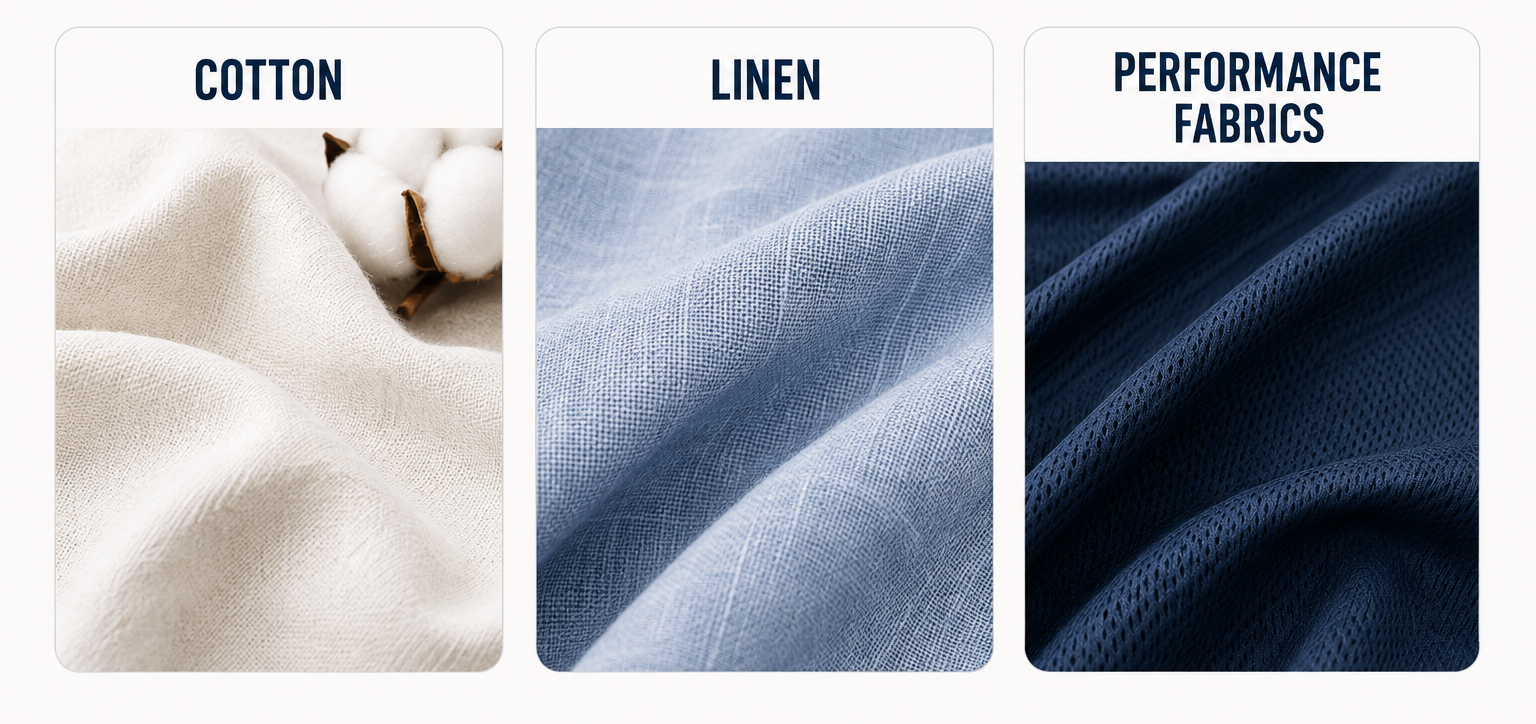
Cotton
Cotton is one of the most common choices for everyday clothing in warm weather.
It is:
- Soft against the skin
- Breathable
- Comfortable for extended wear
- Easy to find and maintain
Cotton can also absorb sweat, which is why many people find cotton shirts comfortable when sweating.
But absorption and drying are not the same thing.
When cotton takes on a significant amount of moisture, it can hold that moisture for longer, especially in humid conditions. A cotton shirt may therefore feel comfortable initially but become damp as the day continues.
So if you're asking, “Do cotton shirts absorb sweat?”, the answer is yes. But whether that makes cotton the best choice depends on what you want your clothing to do with that moisture.
Linen
Linen is popular for hot weather for good reason.
Its lightweight construction and natural breathability allow air to move through the garment, which can make it feel comfortable in high temperatures.
Linen can be a particularly useful choice when airflow is your main priority.
However, linen has limitations too. It wrinkles easily, and moisture can still become visible depending on the fabric weight, color, and how much you sweat.
So while linen can be excellent for staying comfortable, a breathable shirt isn't automatically a sweat-hiding shirt.
Performance Fabrics
Many performance fabrics are engineered to move moisture away from the skin and help it dry faster.
Depending on the fabric and construction, they can offer:
- Faster drying
- Lightweight construction
- Moisture management
- Useful performance during physical activity
However, performance fabric is a broad category. Not every synthetic fabric behaves in exactly the same way, and not everyone prefers the feel of synthetic fibers for all-day wear.
If you're specifically looking for the best shirt material for sweating, don't judge a fabric only by whether it absorbs sweat. Consider how it handles moisture, how quickly it dries, how breathable it feels, and whether the resulting moisture is visible.
See,Best Fabrics for People Who Sweat a Lot: What Actually Keeps You Dry?
Do Clothing Colors Really Matter?
Yes, but there are actually two different questions here:
Will this color help me stay cooler?
and
Will this color make sweat marks less noticeable?
Those aren't always answered by the same shirt.
Lighter Colors and Heat
Lighter colors generally reflect more sunlight than darker colors, which can be useful when you're spending time outdoors.
This is one reason white, beige, and other lighter shades are common choices for summer clothing.
But that doesn't automatically mean they are better at hiding sweat.
Color and Sweat Visibility
Sweat can change the appearance of fabric when an area becomes wet.
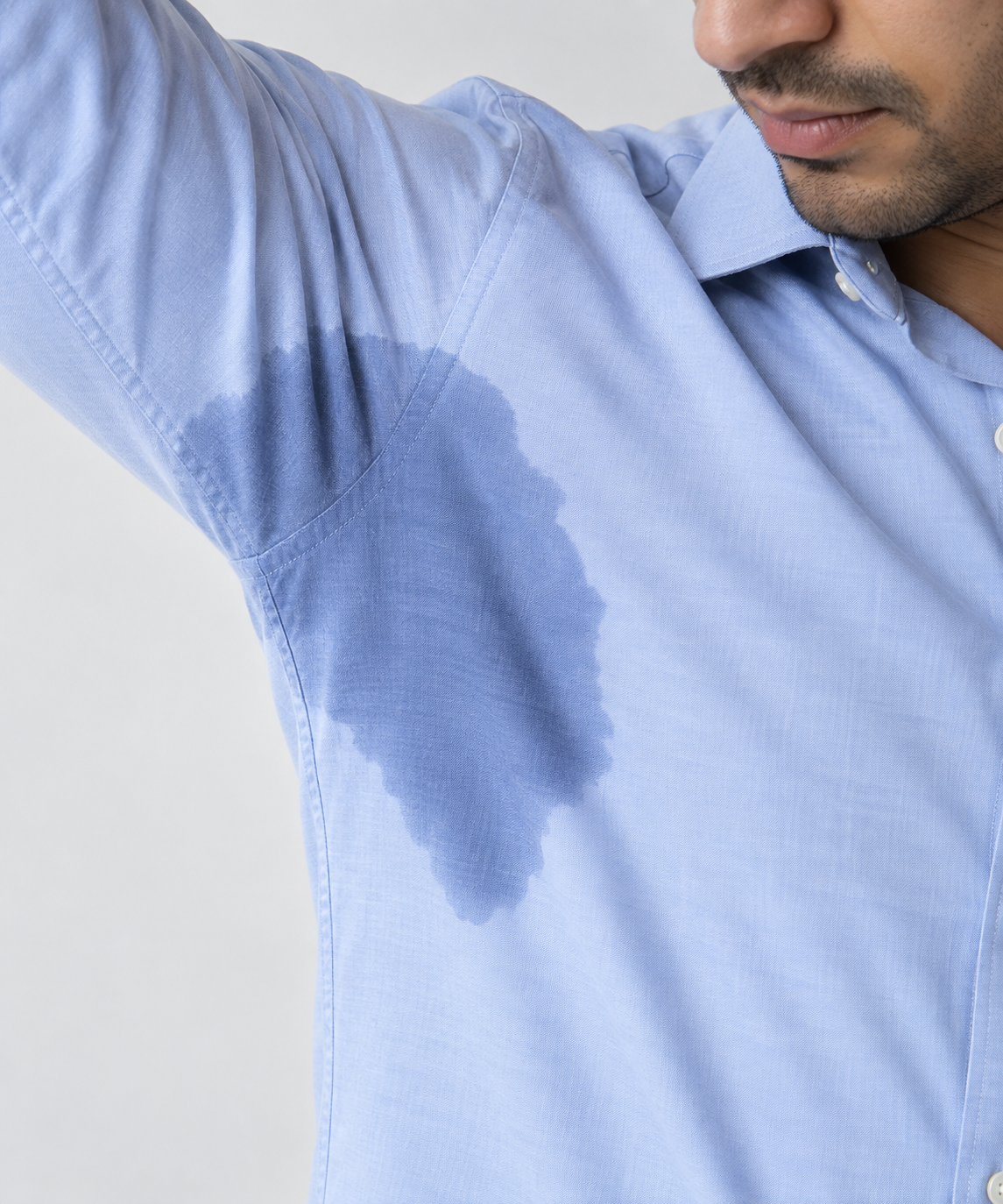
Mid-tone colors such as grey, light blue, olive, and certain pastel shades can make this particularly noticeable because the wet area may appear darker than the surrounding dry fabric.
That's why someone can choose a shirt that feels perfectly suitable for the heat and still find themselves dealing with obvious sweat marks.
In other words:
Staying cool and hiding sweat marks are two different clothing problems.
If you're choosing clothes for a long commute or an office day in India's summer, it's worth thinking about both.
Why Fit Matters More Than You Think
Fabric and color often get all the attention, but fit also affects how comfortable you feel in hot weather.
A very tight garment can hold fabric close to the skin and reduce the space available for airflow. It can also make moisture feel more noticeable.
A comfortable fit gives the garment some room to move and can allow better airflow around the body.
That doesn't mean oversized clothing is automatically better.
The goal is a fit that gives you enough room for movement and airflow without becoming impractical or uncomfortable.
For office wear especially, the best fit is usually one that feels comfortable while still looking structured and appropriate.
The Most Overlooked Layer: Your Undershirt
When people think about dressing for summer, they usually think about the shirt everyone can see.
The layer underneath gets much less attention.
But your undershirt sits directly between your skin and outer clothing, which means it can influence what happens to sweat before it reaches the shirt people actually see.
Think of your clothing as a simple system:
Skin → Base Layer → Outer Layer
Once sweat is produced, moisture has to move through this system.
If you're already sweating heavily, the choice of base layer can therefore become important. A regular undershirt may absorb some moisture, while a moisture-wicking layer may move it outward.
A sweat-management undershirt takes a different approach by focusing specifically on reducing moisture transfer to the outer garment, particularly around areas such as the underarms.
This distinction matters because the best clothing solution depends on the problem you're actually trying to solve.
When Staying Cool Isn't the Only Problem
If you're spending the day in India's heat and humidity, breathable clothing can make a real difference.
But sometimes the problem isn't simply:
“I'm feeling hot.”
It's:
“I'm comfortable, but my shirt is showing sweat.”
That's a different clothing problem.
This is where YUGHO's Sweatproof Undershirt is designed to help.
YUGHO focuses specifically on visible underarm sweat marks. Its sweat-management construction is designed to help reduce moisture transfer from the underarm area to the outer shirt, while still allowing your body to sweat naturally.
The idea isn't to make you stop sweating.
It's to address what happens after you sweat particularly when visible marks on your outer clothing are the part that bothers you.
For someone commuting through India heat, walking between meetings, travelling across a city, or spending a long day at work, that can be a useful additional layer of sweat management.
See how YUGHO's Dry Shield Technology works
Other Practical Ways to Dress for Hot and Humid Weather
Your clothing system doesn't have to be complicated.
A few practical choices can make hot days easier to manage:
Choose breathable outer layers
Look for garments that allow some airflow rather than trapping heat closely against your body.
Avoid unnecessary layers
Every additional layer can affect heat and moisture. Wear only what you actually need for the weather and setting.
Consider your commute
The clothes that work inside an air-conditioned office may not feel the same during a 30-minute walk, bike ride, or crowded public transport journey.
If you sweat heavily during your commute, consider what you'll be wearing before you reach the office.
Carry a backup when needed
For particularly long or demanding days, carrying an extra shirt can be a simple solution.
Give yourself time to cool down
If possible, allow a few minutes after reaching your destination before heading directly into an important meeting. This gives your body time to settle after the heat and movement of your commute.
Frequently Asked Questions
What is the best fabric for hot and humid weather in India?
Cotton and linen are popular choices because they are comfortable and breathable, while some performance fabrics are designed to move moisture and dry faster. The best fabric depends on your activity, environment, and whether your priority is cooling, moisture management, or sweat visibility.
What are the best clothes for people who sweat a lot?
Look for clothing that is comfortable, breathable, and appropriate for how you sweat. Fabric, fit, color, and layering all matter. If visible sweat marks are the main concern, also consider how the clothing handles moisture between your skin and outer shirt.
Do cotton shirts absorb sweat?
Yes. Cotton is absorbent and can take up moisture from the skin. However, absorbing sweat doesn't mean it will dry quickly. In humid conditions, a cotton garment can remain damp for longer once it becomes saturated.
Do linen shirts show sweat?
They can. Linen is breathable and comfortable in hot weather, but sweat visibility depends on the fabric, color, construction, and how much you sweat. Breathability and sweat visibility are not the same thing.
What shirt colors show sweat the most?
Sweat visibility depends on the fabric as well as the color. Mid-tone shades such as grey, light blue, olive, and some pastel colors can make wet areas more noticeable because moisture changes the appearance of the fabric.
Does wearing an undershirt help with sweating?
An undershirt can add another layer between your skin and outer clothing, but different undershirts handle moisture differently. A regular undershirt may absorb sweat, while moisture-wicking and sweat-management constructions are designed to handle moisture in different ways.
Why do sweat marks appear on shirts?
Sweat marks appear when moisture reaches and changes the appearance of the outer fabric. Humidity, sweating level, fabric type, color, fit, and the layers between your skin and outer shirt can all affect how visible those marks become.
Can you sweat more in humid weather?
Humidity doesn't necessarily mean your body suddenly produces much more sweat, but it can make sweating feel more intense because sweat evaporates less efficiently. That's why people often feel wetter and more uncomfortable in humid conditions.
How does YUGHO help with sweat management?
YUGHO's Sweatproof Undershirt is designed around one specific problem: visible underarm sweat marks. Its targeted sweat-management construction helps reduce moisture transfer from the underarm area to the outer shirt, without trying to interfere with your body's natural sweating process.
Is YUGHO suitable for office wear?
Yes. YUGHO is designed as an everyday sweat-management undershirt for situations such as office work, commuting, meetings, presentations, and other occasions where visible underarm sweat marks can be distracting.
What Should You Wear in India's Hot and Humid Weather?
There isn't one perfect outfit for every hot and humid day.
A practical approach is to think about four things together:
Fabric: Choose something breathable and appropriate for your activity.
Color: Consider both heat absorption and how easily the color shows moisture.
Fit: Leave enough room for comfort and airflow without going unnecessarily oversized.
Layering: Pay attention to the layer closest to your skin, especially if you tend to sweat through your outer shirt.
Most importantly, remember that staying cool and hiding sweat marks are separate problems. A shirt can solve one without solving the other.
If your main concern is visible underarm sweat marks rather than simply feeling hot, YUGHO's Sweatproof Undershirt is designed specifically for that gap. It works as a sweat-management base layer beneath your regular clothing, helping reduce visible underarm moisture on the outer shirt.
So when you're deciding what to wear in India's heat and humidity, don't ask only:
“Will this keep me cool?”
Also ask:
“How will this clothing handle the sweat once I start sweating?”
That small shift can make your wardrobe choices much more practical for long, hot days.
Experiences From Professionals and Daily Commuters
★★★★★
“The way product describes it works as expected, sweating is not visible the whole day even when high degree of heat wave. I will recommend it to my friends.”
- Prem Hari Sharma Verified Customer
★★★★★
“Justified the main motive.! Sweat didn't appear outside the underarm patch.! The product is light weight to wear.! Used it for almost 6-7 hours under sweat condition.! Zero visibility of sweat in the underarm. It completely blended with my shirt inside, just like every inner. Extremely great to cover the formals.”
- Naveen Anandan Verified Customer
About the Author
Hi, I'm Pooja, Founder of YUGHO
With a background in apparel and textile development, I spend my time studying how fabrics, garment construction, and layering systems affect everyday comfort. Through YUGHO, the focus is on creating sweat-management essentials that help people feel more comfortable and confident during real life situations such as commuting, work, presentations, and daily wear. YUGHO was built on a simple belief clothing should solve everyday problems and add genuine value to the people who wear it.
Medical Disclaimer: This article is for educational purposes only and should not be considered medical advice. If excessive or persistent sweating affects your daily life, consult a qualified healthcare professional. Our content is researched using trusted medical sources and evidence-based information.