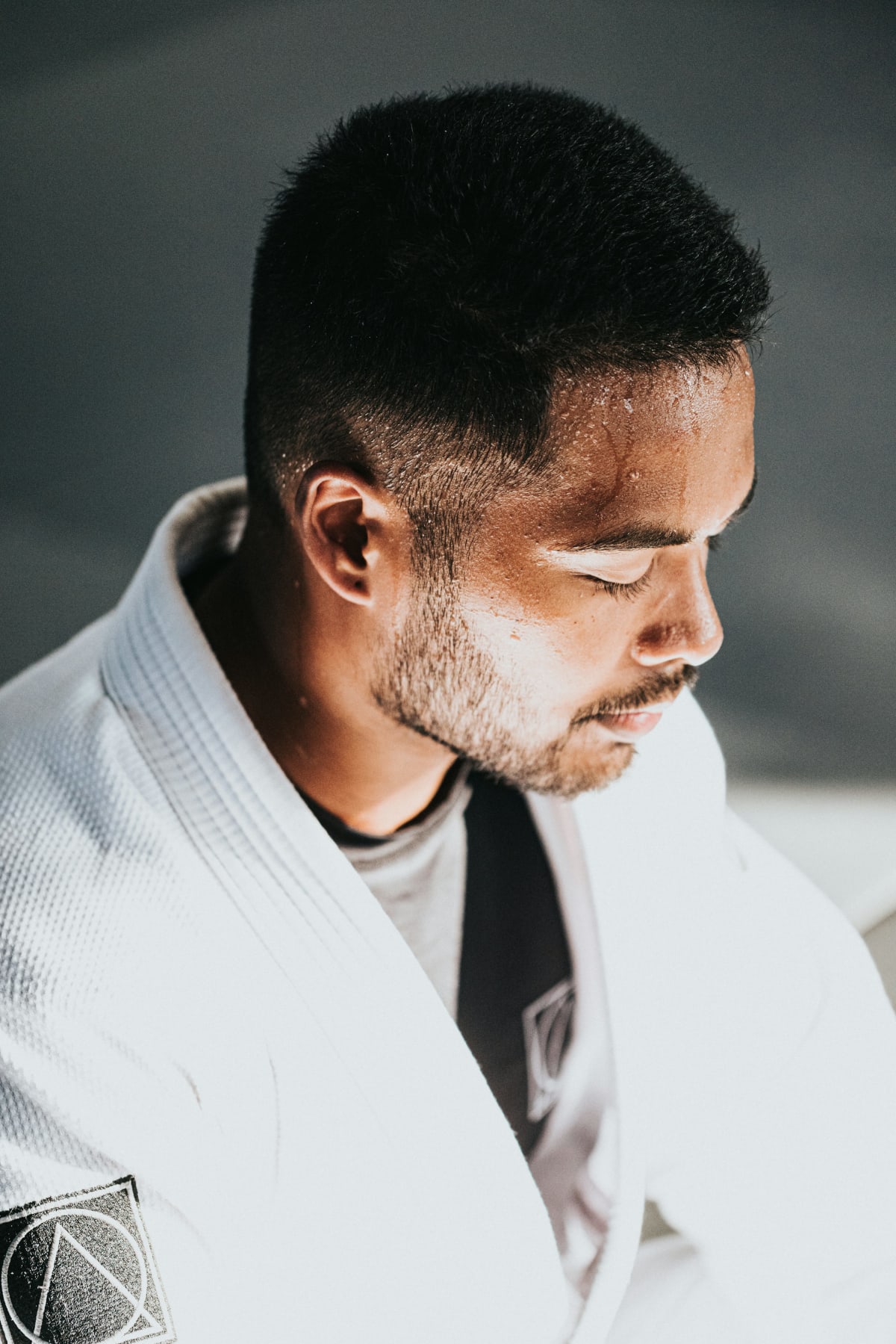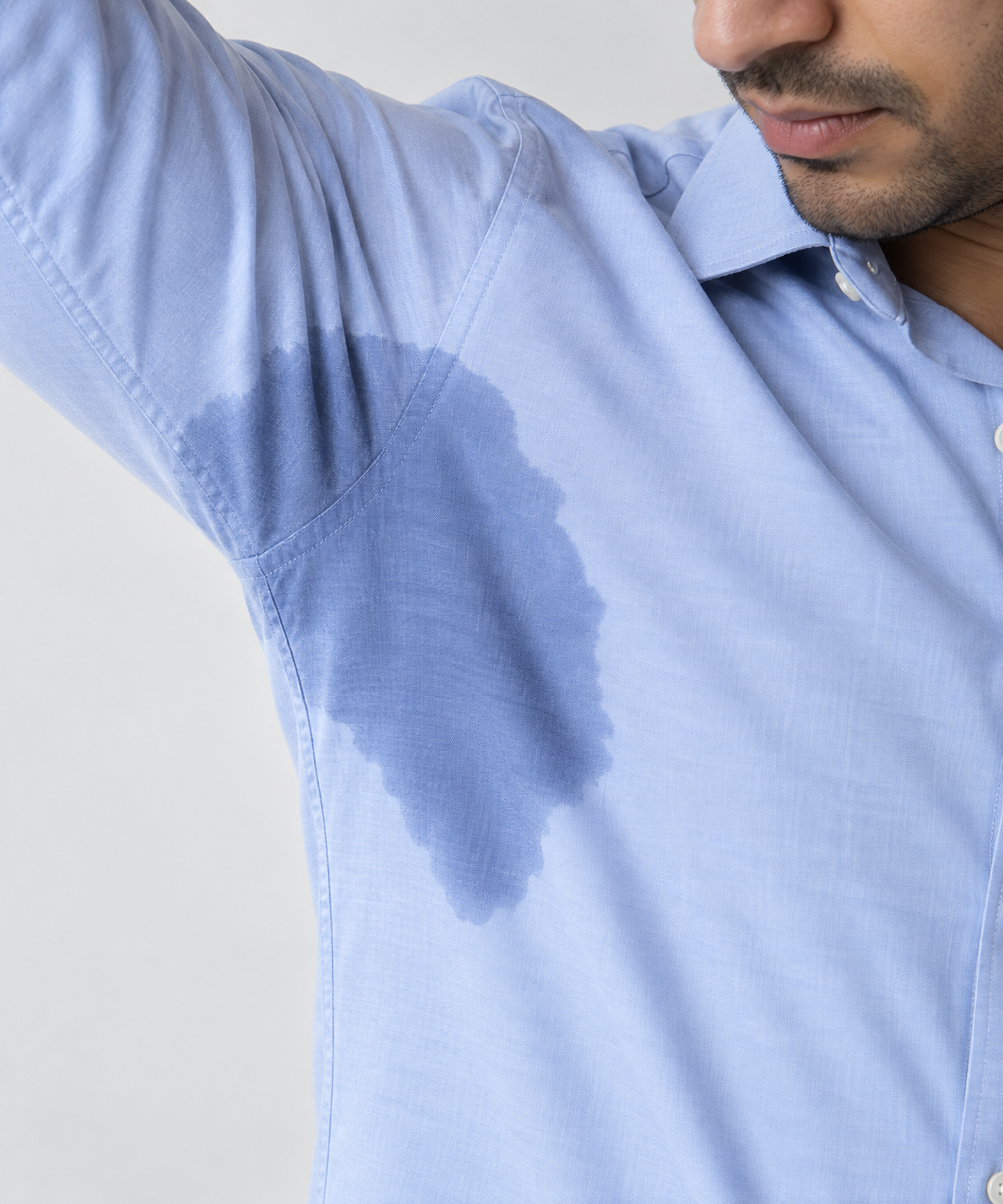
Underarm sweating is normal, but excessive or noticeable sweating can become frustrating when it affects your work, commute, social situations or clothing.
If you are searching for natural ways to stop underarm sweating, the realistic goal is not to stop sweating completely. Your body needs to sweat to regulate temperature. Instead, natural approaches can help reduce some sweating triggers and manage how noticeable the sweat becomes.
Quick Answer:
Reduce caffeine if it makes you sweat more.
Limit spicy foods before situations where sweating is a concern.
Manage stress with breathing exercises, regular exercise and adequate sleep.
Stay hydrated and avoid unnecessary overheating.
Use gentle astringents such as alcohol-free witch hazel for temporary surface moisture management.
Wear breathable clothing to improve comfort.
Manage visible sweat marks with appropriate clothing layers.
If sweating is excessive or regularly affects daily life, speak with a healthcare professional.
Natural methods may help with triggers, but they should not be presented as a cure for excessive sweating or hyperhidrosis.
Why Do Your Underarms Sweat?
Underarm sweating is influenced by several factors, including temperature, physical activity, stress, hormones and individual differences in sweat production.
You may notice more underarm sweating when you are:
-
Nervous or stressed
-
Exercising or physically active
-
In a hot or humid environment
-
Drinking caffeine
-
Eating spicy foods
-
Wearing clothing that makes you feel hot
Underarm sweating can also happen when you are sitting in a cool environment. Emotional situations such as interviews, presentations or meetings can trigger sweating even when your body does not need additional cooling.
This is why the best way to reduce underarm sweating naturally is usually to identify your personal triggers rather than relying on one home remedy.
For more background, read why some people naturally sweat more than others.
Natural Home Remedies for Underarm Sweating
Some home remedies are traditionally used to manage moisture or odour. However, evidence varies considerably between remedies, and none should be expected to permanently stop underarm sweating.
1. Try Alcohol-Free Witch Hazel
Witch hazel contains tannins with astringent properties that can temporarily tighten skin and reduce surface moisture.
If you want to try it, choose an alcohol-free product and apply a small amount to clean skin.
Patch test first, particularly if you have sensitive skin.
Witch hazel may help with surface moisture, but it does not stop your sweat glands from functioning.
2. Try a Black Tea Compress
Black tea contains tannins and is sometimes used as a natural astringent.
You can cool a brewed tea bag and place it against the underarm area for a few minutes.
Research specifically supporting black tea as an effective treatment for underarm sweating is limited, so consider this a low-evidence home remedy rather than a proven treatment.
Stop if your skin becomes irritated.
3. Be Careful With Apple Cider Vinegar
Apple cider vinegar is sometimes recommended as a home remedy for underarm odour and sweating.
However, there is limited evidence that applying apple cider vinegar meaningfully reduces sweat production.
If you use it on the skin, it should be diluted because undiluted vinegar can cause irritation.
It is also important to distinguish odour management from sweat reduction. Something that changes underarm odour does not necessarily reduce how much you sweat.
4. Use Baking Soda Carefully
Baking soda is commonly used in homemade deodorant because it can absorb moisture and help neutralise odour.
However, frequent application can irritate sensitive underarm skin.
If you experience redness, burning or irritation, stop using it.
Baking soda should therefore not be considered a reliable method for stopping underarm sweating.
Lifestyle Changes That May Help Reduce Underarm Sweating
Natural approaches are often more useful when they target the things that trigger your sweating.
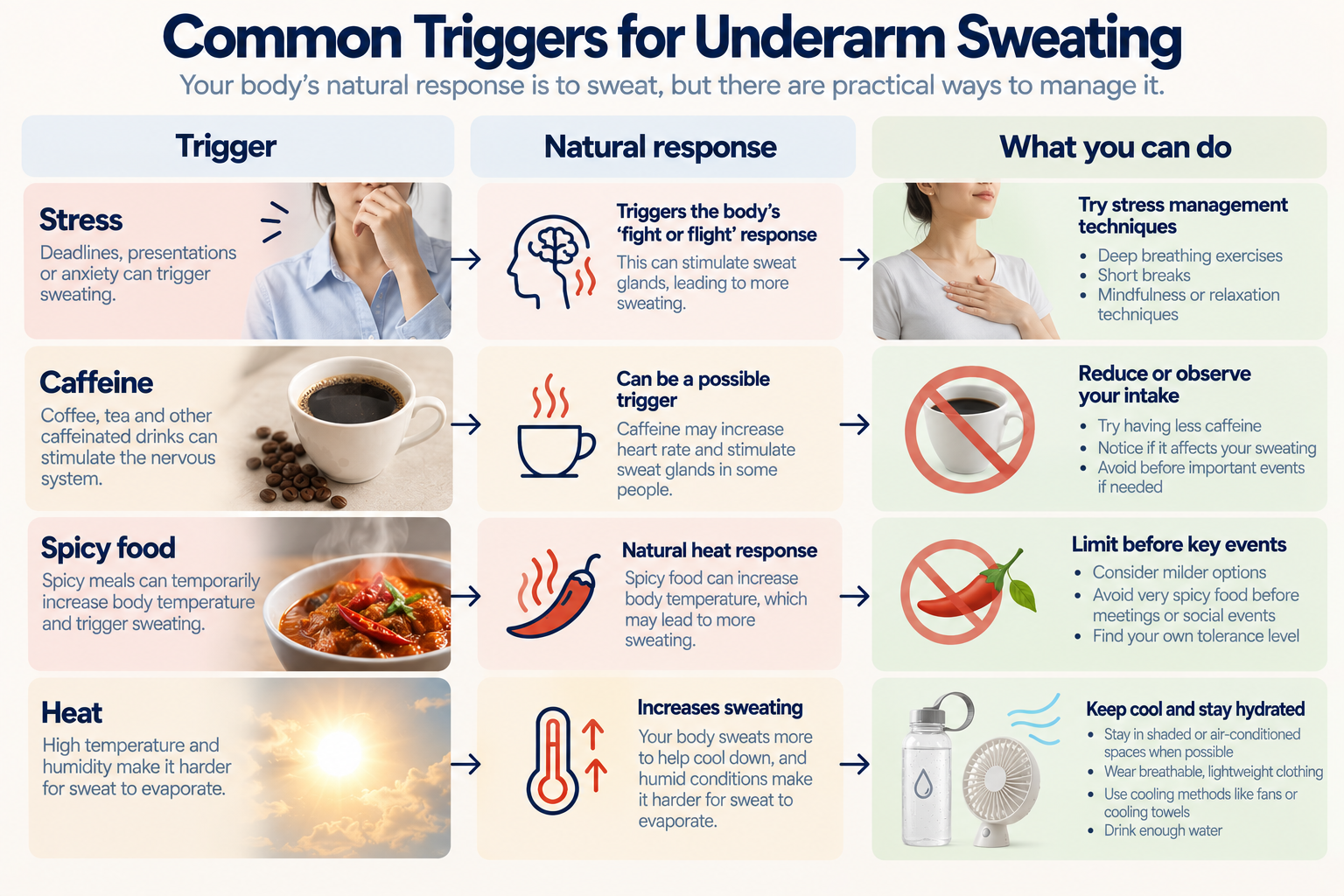
Reduce Caffeine If It Triggers You
Caffeine stimulates the nervous system, and some people notice increased sweating after coffee or other caffeinated drinks.
You do not necessarily need to eliminate caffeine completely.
Instead, pay attention to whether your underarms sweat more after consuming it.
You could try:
-
Reducing the number of caffeinated drinks
-
Switching one drink to decaf
-
Avoiding caffeine before an important presentation
-
Comparing your sweating on lower-caffeine days
If you notice a consistent connection, reducing caffeine may help.
Limit Spicy Food Before Important Events
Spicy foods can trigger a sweating response in some people.
If you already know that spicy food makes you feel hotter or sweat more, consider avoiding it before:
-
Presentations
-
Interviews
-
Meetings
-
Weddings or events
-
Long commutes
-
Other situations where visible sweat is a concern
This does not mean spicy food causes excessive sweating in everyone. Individual responses vary.
Manage Stress and Anxiety Triggers
Stress is an important trigger for underarm sweating.
You may notice sweat appearing before a presentation, interview or difficult conversation even when the room is cool.
Simple techniques may help you manage the stress response:
-
Slow breathing
-
Meditation
-
Regular physical activity
-
Consistent sleep
-
Taking a few quiet minutes before an important event
The goal is not to guarantee that sweating stops. It is to reduce one potential trigger.
Stay Hydrated
Drinking enough water helps your body regulate temperature.
Hydration will not stop normal sweating, but it can be particularly important in hot weather or during physical activity.
Keep water nearby and drink regularly rather than waiting until you become very thirsty.
Stay Cool
Heat naturally increases sweating because your body uses sweat to cool itself.
When possible:
-
Choose cooler environments
-
Improve airflow
-
Avoid unnecessary direct sunlight
-
Wear lightweight clothing
-
Take cooling breaks during hot conditions
Reducing heat exposure can reduce one of the reasons your body needs to sweat.
Can Clothing Help With Underarm Sweating?
Yes, but clothing solves a different part of the problem.
Natural remedies and lifestyle changes are mainly aimed at reducing triggers or managing sweating.
Clothing can help manage what happens after you sweat.
For example, breathable clothing can improve comfort, while colour and fabric construction can affect how visible moisture becomes.
If visible underarm sweat marks are your main concern, a purpose-built sweatproof undershirt can add another layer between your skin and outer shirt.
Can a Sweatproof Undershirt Stop Underarm Sweating?
No. A sweatproof undershirt does not stop your sweat glands from producing sweat.
Its purpose is different.
YUGHO's Sweatproof Undershirt uses Dry Shield Technology around the underarm area to help reduce moisture transfer to the outer shirt.
You can see the construction and moisture-management approach in how sweatproof undershirts work.
What If Natural Remedies Do Not Work?
Natural remedies may help with mild sweating or specific triggers, but they are not guaranteed to work for everyone.
If you have tried lifestyle changes and still experience heavy underarm sweating, do not assume that you simply have not found the right home remedy.
Persistent or excessive sweating can sometimes be associated with hyperhidrosis, which may require professional evaluation and treatment.
When Should You See a Doctor About Underarm Sweating?
Consider speaking with a healthcare professional if:
-
Sweat regularly soaks through your clothing without exercise or warm weather.
-
Underarm sweating interferes with work or daily activities.
-
You suddenly start sweating much more than usual.
-
You regularly experience significant night sweating.
-
Sweating occurs even when you are cool or resting.
-
Sweating is causing significant disruption to your daily life.
Natural remedies should not replace medical evaluation when sweating is persistent, severe or unexplained.
Natural Ways to Stop Underarm Sweating: What Actually Works?
There is no single natural remedy that will stop underarm sweating permanently.
The most practical approach is to identify what triggers your sweating and work on those factors.
If caffeine is a trigger, reduce it.
If spicy food makes you sweat more, avoid it before important situations.
If stress triggers your underarms, use breathing, exercise, sleep and other stress-management strategies.
If heat is the problem, focus on cooling, airflow, hydration and breathable clothing.
And if your main concern is not the amount of sweat but visible sweat marks, clothing can help manage what happens after you sweat.
That is where a YUGHO Sweatproof Undershirt can complement your routine by helping reduce visible underarm sweat marks on your outer shirt.
Frequently Asked Questions
How do you stop underarm sweating naturally?
You cannot guarantee that natural methods will stop underarm sweating completely. However, reducing triggers such as caffeine, spicy foods, heat and stress may help some people. Staying hydrated and wearing suitable clothing can also improve comfort.
What is the best natural way to stop underarm sweating?
There is no single best natural remedy for everyone. Start by identifying your triggers. If caffeine, stress, heat or spicy food consistently makes your sweating worse, managing those factors may help.
How can I reduce underarm sweat?
You can try reducing known triggers, managing stress, staying cool and hydrated, and wearing breathable clothing. If sweating remains excessive or interferes with daily life, consider speaking with a healthcare professional.
Do natural remedies work for excessive underarm sweating?
They may help manage certain triggers or surface moisture, but they are not a reliable treatment for excessive sweating or hyperhidrosis.
Does witch hazel stop underarm sweating?
Witch hazel may temporarily reduce surface moisture because of its astringent properties, but it does not permanently stop sweat production.
Can caffeine make underarms sweat more?
It can for some people. Caffeine stimulates the nervous system, and some people notice increased sweating after consuming it.
Can spicy food cause underarm sweating?
Spicy food can trigger sweating in some people because capsaicin can create a sensation of heat and activate a cooling response.
How can I prevent underarm sweat from showing on my shirt?
You cannot always prevent sweating itself, but you can manage visibility. Clothing colour, fabric construction and layering can all affect how noticeable underarm moisture becomes. A sweatproof undershirt can provide an additional moisture-management layer beneath your outer shirt.
Can you stop underarm sweating permanently?
Natural remedies cannot guarantee permanent prevention of underarm sweating. If excessive sweating is persistent, a healthcare professional can help determine the cause and discuss appropriate treatment options.
What Our Customers Say
★★★★★
“I was embarrassed by underarm sweat marks on my T-shirts. I ordered YUGHO because I was looking for a solution, and the quality is excellent. There are no visible sweat marks on my shirts, and I don’t need to wash them daily. It is also much more affordable than a similar sweatproof T-shirt I bought from the USA. I would recommend YUGHO to anyone worried about visible sweat marks. It has brought my confidence back.” -Nikhil Anand, Verified Customer
★★★★★
"Soft, comfortable, and effective. I noticed a significant reduction in visible underarm sweat marks, even after a long day. Highly recommended!" - Rukesh Hari Sharma , Verified Customer
About the Author
Hi, I'm Pooja, Founder of YUGHO.
With a background in apparel and textile development, I study how fabrics, garment construction and layering systems affect everyday comfort. Through YUGHO, the focus is on creating sweat-management essentials that help people feel more comfortable during everyday situations such as commuting, work, presentations and daily wear.
YUGHO was built on a simple belief: clothing should solve everyday problems and add genuine value to the people who wear it. **Medical Disclaimer: This article is for educational purposes only and should not be considered medical advice. If excessive or persistent sweating affects your daily life, consult a qualified healthcare professional.