PAN-INDIA SHIPPING • SWEAT-PROOF UNDERSHIRTS · SHIPS IN 24–48H
Menu
Back to all stories

Sweat-Proof vs Moisture-Wicking Clothing: What is the Difference?

Compare sweat-proof vs moisture-wicking clothing to understand how each works, when to wear them, and which is better for managing underarm sweat and reducing visible sweat marks.

Sweat-Proof vs Moisture-Wicking Clothing: What is the Difference?
If you've ever noticed dark underarm sweat marks during an important meeting or finished a workout wondering why your "moisture-wicking" shirt still looked soaked, you're not alone.

Sweating is a completely natural process that helps regulate your body temperature. However, the clothing you wear determines how that sweat is managed—and more importantly, whether it becomes visible.

Today, many brands promote terms like moisture-wicking, quick-dry, performance fabrics, and sweat-proof clothing. While these phrases may sound similar, they describe different technologies designed to solve different problems. Understanding the difference is important because choosing the wrong type of clothing can leave you uncomfortable, self-conscious, or disappointed with your purchase.

At YUGHO, we build value-based essentials designed to solve everyday problems through thoughtful apparel engineering. Our focus isn't on stopping your body from sweating—it's on helping people feel confident by managing one of the biggest concerns associated with sweating: visible underarm sweat marks.

In this guide, we'll explain the difference between sweat-proof and moisture-wicking clothing, how each technology works, where each performs best, and which option makes the most sense for your lifestyle.

Quick Answer

Are you short on time? Here is the quick summary of sweat-proof vs moisture-wicking clothing:
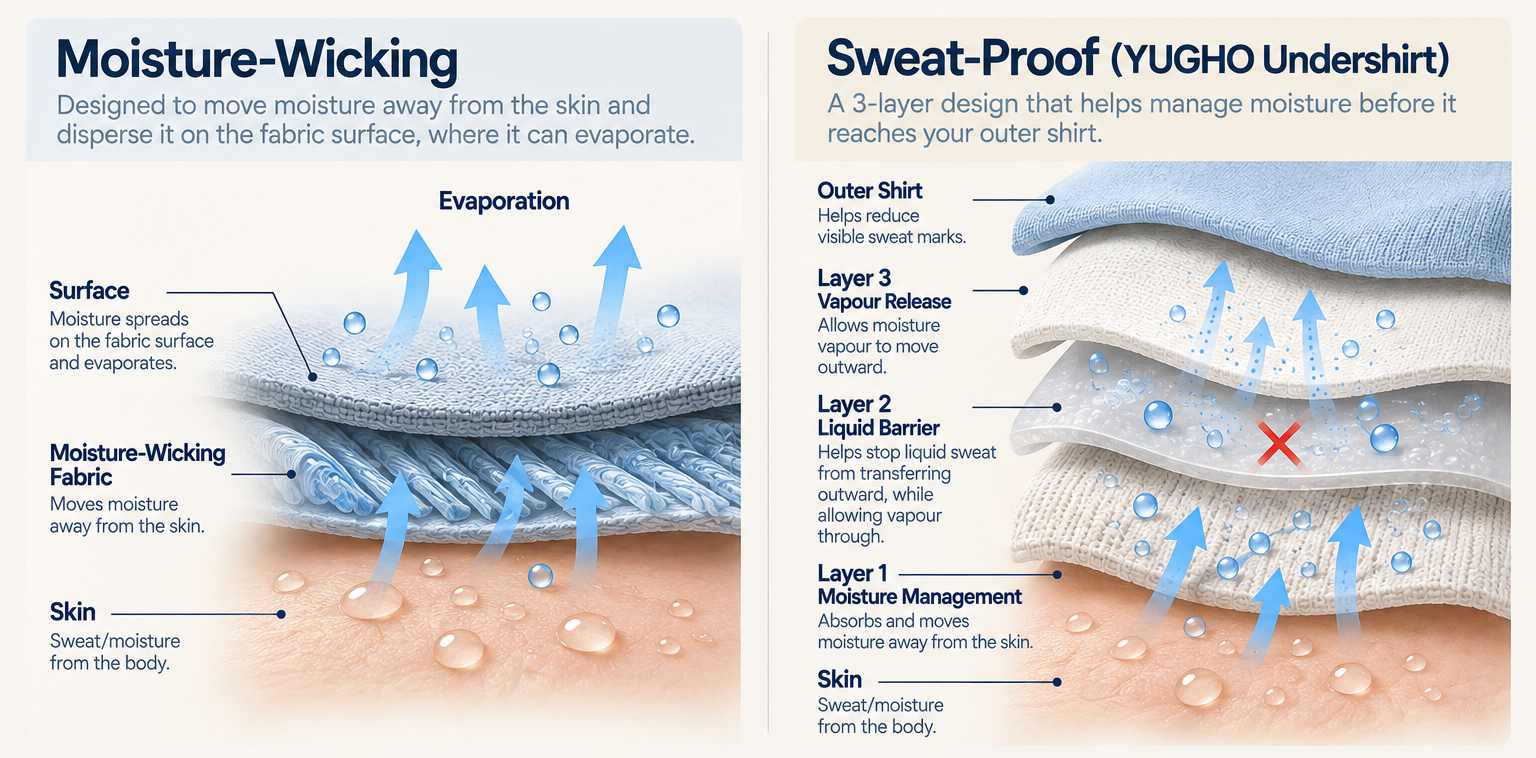
Moisture-Wicking Clothing: Pulls sweat away from your skin to the outer surface of the fabric so it can evaporate quickly. It keeps you physically dry but will display visible sweat marks to everyone around you. It is best suited for athletic wear and the gym.
Sweat-Proof Clothing: Utilizes integrated layers and barriers to block sweat from reaching the outer layer of your clothing. It stops visible sweat marks entirely. It is best suited for office wear, daily commutes, formal events, and serves as a lifestyle solution for people with hyperhidrosis.
The Bottom Line: If you want to cool down during a run, wear moisture-wicking fabrics. If you want to hide underarm sweat and avoid visible stains at work, wear a sweat-proof undershirt.
Why Do These Terms Get Confused? Many shoppers assume that if a shirt is marketed as "moisture-wicking," it will also prevent sweat marks. That's understandable—but it's a common misconception. The confusion comes from the fact that both technologies deal with sweat. However, they solve completely different problems. Think of it this way:
  • Moisture-wicking clothing focuses on comfort and cooling.
  • Sweat-proof clothing focuses on appearance and confidence.
One helps sweat evaporate faster. The other helps reduce the visibility of sweat. Once you understand this difference, choosing the right clothing becomes much easier. What Is Moisture-Wicking Clothing? Moisture-wicking clothing is commonly found in athletic wear, gym clothing, running apparel, hiking gear, and sports uniforms. Its primary purpose is to help your body stay cooler during physical activity.

How Does Moisture-Wicking Clothing Work?

Instead of absorbing sweat like cotton, moisture-wicking fabrics transport sweat away from your skin using tiny channels within the fabric structure. This process—known as capillary action—moves moisture to the outer surface of the garment, where it spreads out and evaporates more quickly. As the sweat evaporates, it creates a cooling effect that helps regulate body temperature during exercise. This is why moisture-wicking clothing feels drier than a traditional cotton T-shirt after an intense workout.

Advantages of Moisture-Wicking Clothing

Dries Quickly

Moisture is distributed across a larger surface area, allowing it to evaporate faster than absorbent fabrics.

Helps Keep You Cool

Rapid evaporation assists your body's natural cooling mechanism, making these fabrics ideal during workouts and outdoor activities.

Lightweight and Breathable

Most moisture-wicking garments are designed with airflow in mind, helping improve comfort during prolonged physical activity.

Ideal for Sports

Whether you're running, cycling, hiking, or playing football, moisture-wicking fabrics help reduce the heavy, soaked feeling that traditional fabrics can develop during exercise.

Limitations of Moisture-Wicking Clothing

While moisture-wicking clothing performs exceptionally well during exercise, it isn't designed to solve every sweat-related problem.

Sweat Marks Can Still Be Visible

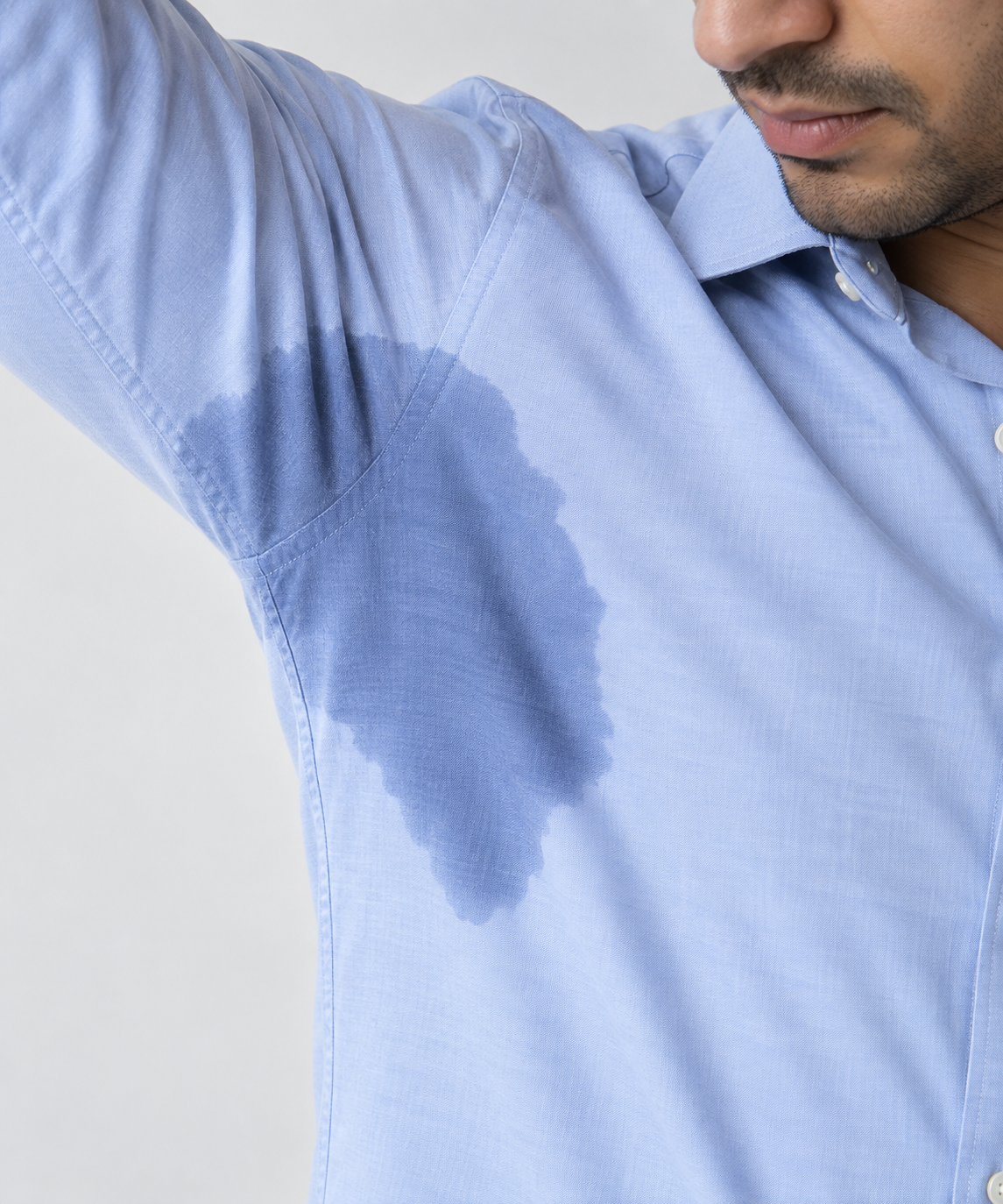
Because the fabric intentionally moves moisture to the outer surface, dark sweat patches can still appear—especially around the underarms, chest, or back.

Not Designed to Hide Sweat

Performance clothing assumes sweating is expected. At the gym, visible sweat isn't usually a concern. In an office or professional setting, however, visible sweat marks can affect confidence even if the fabric feels dry.

Odour Can Build Up

Many synthetic performance fabrics tend to retain odour over time if they aren't washed properly, although newer fabric technologies have improved this significantly.

Read More: How to Stay dry in humid weather

How Does Sweat-Proof Clothing Work?

Unlike standard fabrics, sweat-proof clothing often uses multiple engineered layers in high-sweat areas. While designs vary between brands, the basic principle remains the same:
  • A soft inner layer sits comfortably against your skin.
  • A specialised sweat-management layer helps intercept moisture.
  • The outer layer helps maintain the appearance of your clothing.
This allows your body to continue sweating naturally while helping reduce visible underarm sweat marks on your shirt. Importantly, sweat-proof clothing does not stop your body from sweating. Sweating is essential for regulating body temperature, and no well-designed sweat-management garment should interfere with that natural process.

yugho-commute-heat-sweat-infog-png (2).png---

Advantages of Sweat-Proof Clothing

Helps Reduce Visible Underarm Sweat Marks

Its biggest advantage is confidence. Instead of worrying about raising your arms during a presentation or meeting, you can focus on what you're doing.

Protects Outer Clothing

By reducing moisture transfer, sweat-proof clothing can also help minimize sweat-related marks on your favorite shirts.

Designed for Everyday Situations

  • Office work
  • Business meetings
  • Job interviews
  • Daily commuting
  • Weddings
  • Public speaking
  • Lifestyle solution for people with hyperhidrosis

Read More: Stay dry during presentation

Which You Choose?

ChatGPT Image Jul 17, 2026, 10_02_30 PM.png## Choose Moisture-Wicking Clothing If...

  • You regularly go to the gym.
  • You run or cycle outdoors.
  • You play sports.
  • Your priority is staying cool during physical activity.
  • You don't mind visible sweat because it's expected during exercise.
In these situations, rapid evaporation is far more important than hiding sweat.

Choose Sweat-Proof Clothing If...

  • You work in an office.
  • You attend client meetings.
  • You frequently give presentations.
  • You travel for work.
  • You commute in hot and humid weather.
  • You wear formal shirts regularly.
  • You experience noticeable underarm sweating.
  • Your main concern is visible sweat marks.
  • You have hyperhidrosis and are seeking a practical clothing solution
In these situations, maintaining a neat appearance often matters more than rapid drying. Can You Wear Both Together? Yes—but understanding their roles is important. Sweat-proof clothing and moisture-wicking clothing are not competitors. They're designed for different situations, and in some cases, they can complement each other. For example:
  • A moisture-wicking running T-shirt helps you stay cooler during exercise by encouraging sweat to evaporate quickly.
  • A sweatproof undershirt helps reduce visible underarm sweat marks beneath your office shirt during meetings or your daily commute.
Some people even wear a sweatproof base layer beneath breathable outer clothing for everyday wear, allowing each layer to perform a different function. The key is matching your clothing to the situation rather than expecting one technology to solve every sweat-related concern.

Read More: Proven Ways to keep your underarms dry

Which Is Better for Underarm Sweating? If visible underarm sweat marks are your biggest concern, understanding what each fabric is designed to do makes the choice much clearer. Moisture-wicking clothing is excellent at moving sweat away from your skin, but that moisture still reaches the outside of the fabric. During a workout, that's exactly what you want. During a business meeting, however, those damp patches can still become visible. Sweat-proof clothing approaches the problem differently. Instead of simply moving moisture, it's designed to help manage it before it reaches your outer shirt. The most practical solution is often combining the right outer fabric with the right base layer.

For example, wearing a breathable cotton or linen shirt over a YUGHO Sweatproof Undershirt allows you to enjoy the comfort and airflow of natural fabrics while helping reduce visible underarm sweat marks. Rather than preventing your body from sweating, YUGHO's Dry Shield Technology is designed to help manage where that sweat goes, helping your outer shirt maintain a cleaner appearance throughout the day.

Whether you're commuting to work, attending an interview, travelling, or giving an important presentation, this combination offers a more complete solution than relying on fabric choice alone.

See how Dry Shield Technology works:
Official YUGHO Technology demonstration video here.

Sweat-Proof vs Moisture-Wicking: Which Is Right for You?

Sweat-proof clothing and moisture-wicking clothing are often discussed together, but they are designed to solve different problems.

Moisture-wicking fabrics help move sweat away from your skin to improve comfort and cooling during physical activity, making them ideal for sports and exercise.

Sweat-proof clothing, on the other hand, is designed for moments when appearance matters most. By helping reduce visible underarm sweat marks while allowing your body to sweat naturally, it offers a practical solution for work, travel, meetings, and everyday confidence.

Rather than asking which technology is better, ask which problem you're trying to solve. If your goal is staying cool during a workout, moisture-wicking clothing is the right choice. If your goal is feeling confident in your favourite shirt throughout the day, sweat-proof clothing is designed with that purpose in mind. Frequently Asked Questions

Is sweat-proof clothing waterproof?

Not exactly. Sweat-proof clothing is not designed to keep rain or external water out like a rain jacket. Instead, it uses specialized sweat-management technology in targeted areas—typically the underarms—to help reduce moisture from passing through to your outer clothing while maintaining breathability.

Does moisture-wicking clothing stop sweating?

No. Moisture-wicking clothing does not reduce or stop sweating. Your body continues to sweat normally, but the fabric moves that moisture away from your skin so it can evaporate more quickly.

Can moisture-wicking clothing still show sweat marks?

Yes. This is one of the biggest misconceptions about moisture-wicking fabrics. Because they transport sweat to the outer surface of the garment, visible damp patches can still appear until the moisture evaporates.

Which is better for underarm sweat?

It depends on your goal. If you're exercising or playing sports, moisture-wicking clothing is usually the better choice because it helps cool your body. If your main concern is visible underarm sweat marks during work, meetings, travel, or social occasions, sweat-proof clothing is generally the more suitable option because it's specifically designed to help manage sweat in those high-perspiration areas.

Can I wear a sweatproof undershirt during exercise?

You can, but it isn't its primary purpose. Sweatproof undershirts are designed for everyday situations where maintaining a clean appearance is the priority. For high-intensity workouts, moisture-wicking athletic wear is generally better suited because it promotes faster evaporation across the body.

Is sweat-proof clothing breathable?

Yes. Well-designed sweat-proof clothing combines breathable fabrics with targeted sweat-management technology, allowing your body to regulate temperature naturally while helping reduce visible sweat marks in key areas.
See What our Customers Say

⭐⭐⭐⭐⭐ 5/5

"Soft, comfortable, and effective. I noticed a significant reduction in visible underarm sweat marks, even after a long day. Highly recommended!"
**— Rukesh Hari Sharma


⭐⭐⭐⭐⭐ 5/5

"Wore it all day while driving, walking, and shopping, and my shirt stayed free from visible underarm sweat marks. Comfortable, reliable, and truly useful."
****— Padmanabhan R.**

About the Author

Hi, I'm Pooja, Founder of YUGHO

With a background in apparel and textile development, I spend my time studying how fabrics, garment construction, and layering systems affect everyday comfort. Through YUGHO, the focus is on creating sweat-management essentials that help people feel more comfortable and confident during real-life situations such as commuting, work, presentations, and daily wear. YUGHO was built on a simple belief: clothing should solve everyday problems and add genuine value to the people who wear it.
Medical Disclaimer: This article is for educational purposes only and should not be considered medical advice. If excessive or persistent sweating affects your daily life, consult a qualified healthcare professional. Our content is researched using trusted medical sources and evidence-based information.
Stay Dry and Confident All Day

Experience the signature sweat-proof undershirt designed for professional comfort.

Shop Yugho Undershirts

Related Stories

Best Fabrics for People Who Sweat a Lot: What Actually Keeps You Dry?

Best Fabrics for People Who Sweat a Lot: What Actually Keeps You Dry?

Discover the best fabrics for people who sweat a lot. Compare cotton, linen, bamboo, merino wool, polyester, and moisture-wicking fabrics to stay comfortable, reduce sweat discomfort, and choose the right clothing for hot weather.

Read More →
Why Do I Sweat More Than Other People?

Why Do I Sweat More Than Other People?

Wondering why you sweat more than other people? Learn the most common causes of excessive sweating, when it's normal, when to seek medical advice, and practical ways to manage it with confidence.

Read More →
Thanks for reading!Explore more stories
Shop Now